Showing posts with label Computers. Show all posts

Tuesday, August 15, 2023

Twenty Years Before the Blog

Not a Hopper piece, but Van Gogh -"Two Crabs" (1889)
I just liked the way it looks.
Today, Grubb Street turns 20. The first test post was made at Thursday, 14 August, at 1:50 in the afternoon, PST, followed by this one, which talked about where the name came from (with more info about it here). And it is a surprise that it has lasted 20 years, particularly in such an ephemeral media as the modern Internet.  Other platforms for medium-length writing have blossomed and faded/disappeared over the two decades - Myspace, Google Plus, Livejournal, Twitter, yet this trusty little Blogger has survived (perhaps Google don't realize they are still running it). Though even this has diminished, as the practice of blogging has receded into the depths of hobbyist activity, like model railroading or HAM radios. Those hobbies are still around, but you never hear from them anymore.

Part this reduced throw-weight is Facebook. You look at the blogroll over to the right and you see a sudden drop about in entries starting in 2011. That was about the time I started in on Facebook, and those spur-of-the-moment bon mots that I dealt with HERE suddenly went over THERE. But mostly, I use Facebook to send people HERE when I make a new posting, chiefly because there is an easy link at the bottom of the entry to do so. Ditto X/Twitter. I actually only have a Twitter account because Stan! set one up for me. And I use it to send people HERE.

But I do pay attention to Twitter, even in its now-diminished times. There are enough people that I find interesting that I follow there, in particular Gail Simone, Jennell Jaquays, William Gibson, and Paula Poundstone. And I find the New York Times Pitchbot amusing (It does headlines you'd actually believe seeing in the NYT - "Cure for Cancer discovered - Why This Is Bad for Biden" plus REAL headlines that sound like the Pitchbot made them up) If they go away, I will probably go elsewhere as well. No, I would never pay for a blue check, and have so far been spared the whackos.

I do pay attention to Facebook, and do my part to train the algorithm. I've been liking every Edward Hopper painting I see, so as a result I'm getting more Edward Hopper (and other art) links. And every so often there are a raft of promoted right-wing links pushing books of dubious nature ("Slavery - think of it as a long-term internship") - they all get reported. I put this down at the level of weeding a lawn - mildly irritating but necessary.

I am paying attention to Reddit more as well. Their /news subreddit gives me different versions of the same story of the day. And I pay attention to subreddits about flags, maps, and leopards eating people's faces. There are two Seattle subreddits - /Seattle if you live in Seattle and like it, and /SeattleWa if you live in Bellevue and want to tell everyone that Seattle is dying. 

Will I join the new kids like Mastadon, Post, and BlueSky? No idea. They may join the roster of Dead Media like MeWe and Tapatalk or not. Haven't gotten a Bluesky invite yet. And I would still use it to post links back to this blog. 

In general, though, it feels like the environment of the Internet has gotten worse. The web pages are laced with pop-ups (which are a relic of the 80s) and adverts, crowding out real content. Useful content moves behind paywalls. Wikipedia and Internet Archives have survived, but seem to be under constant threat. Library access has gone up as a result. 

And lest you think I am just bagging on the newer tech, "traditional" television has pretty much died as well. I haven't been a "sit down and veg in front of the tube" guy for years, but when I do get on, there always seems to be SOME cable station that is running Harry Potter, LotR, or the Pirates movies. Those channels which used to have some sort of theme are all doing the same thing, and those that remain are just doing blocks of old content. I don't remember when the last time there was music on MTV or heres-how-you-cook shows on Food Network.  I still pay attention to television for sports, but even that has diminished with Apple+ taking the rights to Major League Soccer.

And when they split the cable feeds to create new channels, those feeds filled up with cheap reruns of old shows from the last century. Yeah, that's where the H&I, Retro, and ME TV stations came from. Cheap content. But, on the good side, Son of Svengoolie is back, who I haven't seen since WGN stopped broadcasting out here. 

I know, I'm sounding like the new age version of the old guy shooing kids off the lawn. So be it.

The blogroll has shrunk over the years. Colleagues and friends have slowly drifted off from media, but I keep them there only because they may sometime come back to life. I keep most of the other links available since I check on them semi-regularly. A lot of the local news links have soft gates - after visiting a certain number of times they cut you off and hit you up for a subscription. And the comics section is still there, though webcomics can be sporadic as well, since they're mostly run by the creatives. 

Does this environment have a future for me? I dunno. I'll probably keep going. I have a couple books in the till that need to be review. I do plays, book, and game reviews. I cannot avoid continuing my look at collectable quarter designs, which is something that I just can't seem to break the habit. Politics I tend to deal with in election season, and then keep it to stuff I can actually vote on. There are still SO many political blogs out there, so I don't think you need one more, and watching the GOP fall down the stairs yet again is SO EXHAUSTING after a while

And that's about it. I think I'm in this until they shut down the service, and doing this primarily for my own amusement. You're more than welcome to tag along.

More later, 

Monday, March 21, 2022

A Change in the Life

 So, long-term readers (both of you) may have noticed that I rarely talk about my personal life up here on Grubb Street. Yeah, I talk about the effects of the recent pandemic on our daily lives, and often talk about the weather, the seasons, and local wildlife. Sometimes I talk about food. Sometimes I talk about adventures with the Lovely Bride But mostly it is book reviews, theater reviews, collectible quarters, and the ongoing saga that is local politics. I know, boring stuff.

However, it this is a good place to mention a major change in my life. As of last Friday, I am no longer with Amazon Games. It was a good run, and really like the people I was working with and the projects I have contributed to. I have great hopes that the current project I left will be a smashing success. You want any gossip, the deal is you have to buy me a beer. Several beers. 

As of today, I have joined Tempo Games, and am working on The Bazaar, and new game they have under development. I remain a Senior Narrative Designer, responsible for sorting out the lore and minimizing the typos. My new team includes a lot of new folk, but also a lot of veterans I have worked with before at ArenaNet and Amazon Games. I'm looking forward to it, and not just because I spent the bulk of the afternoon playing the game intensely. I like it, and I think a lot of other people will like it as well.

I am also serving as a design consultant on a new RPG called Everyday Heroes. A descendent of D20 Modern brought up to date for the 5th Edition, I serve as the "old guy" walking around behind the others and giving various warnings about how we used to do things. I am not the primary designer - those roles are Sig Trent and Chris "Goober" Ramslay, and they're doing a bang-up job. But beyond that, I will say nothing (OK, there's a Kickstarter coming. There. You happy?)

And that's about it for right now. I didn't have a lot to say about what I was working on before, and probably will not have a lot to say about it right now. And a big part of it is that most of what I am working on is "in process", which means it can change, evolve, revise and otherwise mutate between now and when it seems like the light of day, and I don't want to say things on Monday I will have to correct on Friday.

Back in the old days, before everyone carried a recording device in their pocket, the TSR gang could go to GenCon and say any number of things to small rooms of people, confident that we would not be called upon to make corrections when things changed. And often, things WOULD change after we talked about them, because our bosses would ALSO be at those conventions and listen to a lot of fans about what THEY would want us to do. Such things are a part of the past, since we live in a real-time world these days, so I will wait until the cake is done and iced before inviting everyone in for a slice.

That's about it. It's a new adventure, and I am looking forward to it.

More later,

Sunday, May 23, 2021

Plague Books: TED Talks in Text

The Design of Everyday Things by Don Norman, Revised and Expanded Edition, Basic Books, 2013

Provenance: I was part of a online seminar a while back, and one of the other participants, Brannon Boren, recommended this book strongly. Picked it up via Amazon, and soon discovered that it was a bit of a Bible among those engaging in games design, in particular UX (User eXperience) and UI (User Interface).

Review: Even before this book, I was sensitized to UX/UI, due to my job. In part, an Amazon goal is to make processes (ordering stuff, playing games, watching a video) as frictionless as possible, and I am as a result aware of every bump, hiccup, and obstacle on the net and in real life that gets in my way. Just as an example, I am calling out those self-checkout kiosks at the grocery store, which are so bunged up they require live employees to stand by to help out us troglodytes who flail away at them.

But trogs we are not, says Norman - it is primarily the fault of bad design, that does not take into account how people actually use the things they use,communicate with them easily, and can handle when the user does not do the expected thing. And this book is filled with examples of bad design, good design, and evolving design, and the challenges that one faces when trying to create utility for objects that will be used by people who are not in the same room as you, and whom you cannot yell at ("No, turn the knob to the right. Clockwise! No, the OTHER clockwise!").

And this is familiar territory. You've hit things that don't work the way they should - doors that look like they push when they pull. Knobs that don't map directly to the burners on the stoves. Light switches that are not even in the same room as the lights they control (I have a LOT of these in our house, much to the frustration to guests who walk into a darkened bathroom and don't realize the light switch is Back Out in the Hall). The book has a lot of examples, and Norman returns to them several times to push various points through the text.

The book itself is written in bite-sized, readable bits, and is better for reading over a section, considering it for a while, then moving on to the next. IDeal  if, say, you're commuting on a public transport. Or between meetings. Or, well, in the bathroom. This is (I have to admit) where the bulk of my consumption of the book took place. It is like a bunch of short videos distilled down into a readable bite-sized form.

And it has a lot of organizational buckets for its ideas - The Seven Stages of Action. The Five Whys. The Three Levels of Processing. Yes, they sound like competing Martial Arts Schools, but Norman makes they all explainable and how they all fit in together. Indeed, he has the bits that look they evolved neatly into the "Flywheel" process that Amazon and other companies have adopting for product development and adequately using feedback loops.

And he lays out Norman's Law, which summarized, says "As soon as a project starts, it is behind schedule and over budget". Because I've been there, too.

Does he get everything right? Not completely. He uses his own book's organization as an example of text that can be read in any order, because non-fiction is different in fiction in that it is not yoked to a narrative through-line. However even nonfiction has a narrative flow in that it is making an argument and building its conclusions on previously presented material. You go immediately to the back of the book for answers, and you miss out on the logic that gets you there.

The Picturephone - 1970.
Yes, I was alive at that time.
Also, amusingly, he sites as a example the continuing failure of the videophone, which showed up at the end of the 18th Century as a concept for long-distance communication, and continued to never take hold up through the 21st Century (There was an ad for the videophone that was shot in Pittsburgh, and they wheeled it out whenever they were pushing the idea). Of course, in the past year, that entire concept has blown up not by a dedicated device, but by the fact that everyone HAD to teleconference, and with it, the rules changed and suddenly people were zooming/chiming/discording/tiktokking and what have you, even though this expanded volume came out less than a decade ago.

However, in general I am looking at a great little book that is easily consumable, and packs a punch on design issues, and I will strongly recommend it for everyone in "da bizniss", as it was recommended to me. Go forth and be sensitized on the issues.

More later, 

Wednesday, June 10, 2020

Life in the Time of the Virus, Still Continued

I close out our third month of seclusion, and we are fine. A little tired of it all. A little worn out. A little grumpy. But fine.

In this period I helped ship a computer game. Call it my COVID project. Our entire team was working from home, and that in itself is amazing. But with shipping, even though there are about a bajillion things that still need to be done to support/evolve/fix the game, I feel that one of the great pressures on me has passed, and feel a little exhausted as a result.

Part of the recent tasks as we moved to release involved recording voices for future content. So I and my writers were all in our homes, my producer in HIS home in Southern California, our actors in THEIR homes, and our poor audio engineer in the studio in Burbank by himself pulling it all together. My audio guy says the result sounds pretty good. Yeah, I remain amazed that we managed it all.

In the larger medical world the curve is flattening, but our part of the state is not at Phase 2 yet (we are at a modified Phase 1.5, which is what happens when nerds do planning - we break things down into smaller and smaller components). We are getting there - new cases have dropped, death toll is down (but still with us). The whole point of flattening the curve has been not to avoid all risk of infection, but to not overload the medical system with everyone getting sick at once. We have succeeded, yet there remains more to do.

I hear reports that there is herd immunity. I'm not sure about that. COVID-19 is a corona virus, like the common cold. I haven't seen much in the way of herd immunity to that over the years. I am dubious.

I hear reports that the there are mutations that are making the disease weaker, primarily reports from Italy. While that appeals to me in a conclusion to The Andromeda Strain sort of way, I don't see enough movement to support the concept. I remain dubious.

And I have a nervousness that stems from the tendency to admit COVID-19 deaths only when they are absolutely sure that it was COVID-19. So a lot of deaths are now recorded as from pneumonia, with the result that we now have a PNEUMONIA epidemic as the yearly totals are now 3 and 4 times what they normally are. This echoes the AIDS epidemic of my youth, where a lot of deaths of young men were hidden under the guise of "pneumonia".

But we are finally getting the point of wide-spread testing, which is a good thing. We've been guessing for a while now, but of this I am not dubious about.

My plague beard has graduated from "scraggly" to "grizzled".

The robocalls are returning to their natural habitat. One woman keeps calling to tell me there is nothing wrong with my credit. That's nice.

The Lovely Bride and I have succumbed to baking. She has been trying to refine a Kaiser roll recipe that has been kinda of weird on her.  We are making pizza dough, the type that rises overnight, using a recipe from the newspaper. This recipe is clearly meant to just be read, but not implemented. The LB disagrees with about every step of the recipe, so discussion result. Fortunately, after it is all said and done, we get to eat the evidence (and, after all the prep, it really wasn't bad at all).

But people are tired of all this. I get it. I'm not particularly happy myself, and I've got it really easy. I still have my work and talk to my co-workers continually over the 'net. Shortages have been spotty (the latest - shower cleaner and mushroom soup). People have been distancing. Masks are more common than not, particularly at the farmers' markets that are slowly coming back. Less so at the Fred Meyers.

And yet I feel this low-level irritation and agitation. I have less patience on the road, going out for sundries, even though there is less traffic. I have less patience behind the inevitable person at the grocery store paying in loose change. And while I am sure no one has turned the traffic lights to red longer just to peeve me off, but peeve me off they do.

I feel a little bad feeling this way - as I say, I got it easy. No, I've got it REALLY easy. While I was in the basement recording voices long distance, workmen peeled off my back balcony and replaced it with a larger, wider, sturdier, non-rotting version (our other COVID project). Two weeks to get it to the present state, where a base coat is drying. We are delayed because the flooring guy disagrees with what the engineer had put down on his drawing for flashing, while the local municipality agrees but will only authorize doing it the contractor's way if the engineer buys off on it. So we are stalled for the moment. But seriously, this is the worst thing happening? We have it as dead easy.

We endure and we continue and we thrive.We row on.

More later,


Monday, February 17, 2020

Books: God Mode

Agency by William Gibson, Berkley Books, 2020

Provenance: This is a book I was looking forward to, and when I found myself in New York City for a recording session, took the A train down to the Strand in the Village to pick up a copy. And they had none (though they would be happy to order one, their initial shipment having sold out). I picked up a collected pair of Nero Wolfe books I had been missing (so it wasn't a total loss), and the next day picked up the sole copy left on the shelf at a local Barnes and Noble, confidant that I had the last copy available south of 37th Street. Now, I don't expect bookstores to warehouse EVERYTHING, but it a good clue that they under-ordered this particular book, sending people to the on-line sales outposts.

Review: This is a Bill Gibson novel, and has the hallmarks of previous Bill Gibson novels. Powerful AI? Check. Criminal mob operating in the background? Check. A lot of running around by the protagonist? Check. Cool use of tech? Cool use of tech assumed as normal and therefore not explained? Check. So put this one down as comfort food - you know what you are getting.

But what this book does well is in the "William Gibson Phone Call", which is a phrase I conjured for that last chapter, where someone, somewhere, calls in and explains what was going on while your protagonists, with their limited viewpoints, were busy in the novel itself. It is here, but slightly subverted, in that it literally happens with a phone call under a table, but you are actually well-prepared for it. It becomes a summing up as opposed to a surprise. That worked.

But let me give you a quick summary. Verity James (an "app-listener" - it IS explained) is given a new product to playtest. Said project is Eunice, an AI that attains consciousness frightening fast, creates packets (like in the internet) that are going around doing things, allowing her to multitask. The company that gave Eunice to Verity realizes they have uncorked a genie and try to stuff it back in the bottle. Verity goes on the run, helped by an ad hoc team of makers, millionaires, and agents from an alternate Earth.

Right. Alternate Earth. This is the sequel to Periphery, set in the same meta-universe with some of the same characters. Verity's Earth is, well, not quite an alternate timeline, but a "stub" created of the main timeline from about 150 years after the setting in 2018. The main stub sounds like our timeline, but because of earlier meddling, Verity's has some differences - Clinton won in 2016, the Brexit vote failed, and Notre Dame did not catch fire. Probably Harambe the Gorilla is still alive. But everyone there is tense and freaked out anyway, because Verity's Earth is also heading for nuclear war. The gang from the first novel (both from the "future" stub and from a previous stub) help Verity and Eunice in their world.

And the repercussions of this set-up is still in the works. First off, no one we've met knows exactly the science behind the stubs - they may be Chinese, but maybe not. One character seems offers that it is a colonization effort to some degree (though physical objects don't move between stubs, information and telepresence does). And the more advanced main universe (defining itself as being the group that creates stubs, and no one else can, because reasons) is meddling with other universes - benevolently in the case of this particular bunch, less-so in other cases. I am still waiting for the payoff of this last one.

 What I do get is a better handle of some of the other things going on. Gibson is very light on the expository dialogue ("Well, Bob, as you know..."), so you get everything in bits. The Mainline is set after "the jackpot", an extinction-level event that kills 80% of humanity and most of the other vertebrate life forms. Now, earlier SF was big on the sudden nuclear attack/killer snowstorm/pandemic that suddenly changes everything. The jackpot is just a series of catastrophes that wipes out large chunks of the population, but nothing delivering the killer blow. Given that we've had a pandemic, wildfires in Australia, the final Brexit the impeachment of a president and a cyclone hitting Iceland just since the beginning of the year, I tend to feel this jackpot is about right for the end of the world as we know it.

Because it is a slow apocalypse, unevenly distributed, the mainline universe gets a chance to develop tech to, if not fix everything (There is a big garbage patch in the Pacific, big cleaning airstacks dominate London), but to mitigate the damage somewhat. They have assembler and nanotech and AIs and a lot of bots (we wipe out 80% of the population, the lower working classes are filled with imitation humans of various degrees - because we get lonely). The true 1% (mostly criminal, mostly corrupt, often Russian) is still there as the klepts, sorta the secret masters of the surviving world, who are kept in general check to keep them from screwing everything up again.

As noted above, I was reading this book in NYC and on the plane ride home, alternating it with an Ellis Peters mystery set in the Middle Ages. The difference between the styles was a bit of a whipsaw - Gibson's sparse writing style (I finished many short chapters wondering "what have I learned here?") against Peters more opaque language of the assumed middle ages (going to the dictionary to look up psalter and brychan).  Yet both have their own rewards, and Gibson's very shortness telegraphs home his events.

Ultimately, I want some answers, and, these being Gibson books, I don't know if I'm ultimately going to get them. That's OK - we are along for the ride, and it's a pretty good ride.

More later.


Tuesday, December 27, 2016

Game: Uncivilized

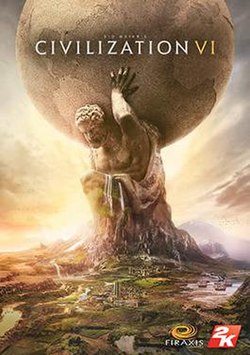
Civilization VI, Firaxis Games

Civilization VI cover art.jpgI tend not to write bad reviews. There is so much good stuff out there I'd rather point you in that direction than whinge and moan about something that is grinding my gears. Even if I am in a situation where I confronted with imperfect productions (which is common in theater, books, and games), I tend to lay out the flaws but praise the good points (In theater terms, that's where I praise the set design).

And I am a big fan of the Civ series, from the very beginning. The overall arc from the single covered wagon to the stars is evocative, and creates the framework for the social narrative of the world. I've played each one, rolling through all the nations, and most of the spinoffs, like Alpha Centauri and Colonization.

All that said, the latest Civilization (the 6th, officially) leaves me with a big heaping pile of "Meh". I still play it, and recognize its strong points, but it is just not working for me.

The big challenge is the slowness of the game. Part of that, I thought initially, was that I had an older machine, but I put the game on my work machine (which exists to DESIGN state-of-the-art games). and found the performance just as as kludgy, even with the settings geared to be higher performance. Further, the game is continually accessing the disk, resulting a heat problem on the machine as the game progresses. For a game with a very long timeframe, this is a problem. You're spending a great deal of the game (particularly in the "middle bit" where you've expanded as far as you can easily and are just running an empire) waiting for the AI to move.

And this would not be a problem if it were not for the fact that the AI is pretty miserable. Units are not upgraded, design-making is limited, and attacks are not co-ordinated. Watching two AI empires beating each other up is pretty much watching a slap-fight. Not a lot of activity there.

Also contributing to the slowness is a new feature that I otherwise kind of like - districts. Now instead of building a temple, then a cathedral, and slowly increasing your city center, you now choose a hex to be your "holy site" where the temple and cathedral may be built. Before you can start building religious buildings you need to have already building the requisite district (similarly libraries need a campus and factories need an industrial district). So it takes longer for to get a temple up and operating, and you are limited to how many districts you can build based on size of the city, so that if you build that holy site you may have to wait a while before you start a campus.

And all this poses another challenge - location is of key importance for the new Civ. Since you have to commit a particular location for a district, you want to optimize it (campuses get a bonus if next to a mountain). That makes city planning a lot more involved, and you can plow under a district for another, but that is horribly expensive in time and money (oh, and you can't just "BUY" a district in the same fashion as buying a building in the game.

So where you place your districts have a definite effect on the productivity of your city, and it is a fiddly bit that demands attention. Actually, the game is FILLED with fiddly bits. Each minor nation contributes different effects to your empire. Your government is a hand of cards that you swap in and out, giving you different benefits. Religions have always been a collection of special abilities that you put together, and they are so here again. And the various units have their own promotional trees depending on general type.

The result is that you have a lot of small bits to handle that combine to create your civilization. Any one won't be the ultimate success of your empire, but there are enough to keep you focused on individual cities as opposed to sprawling nations. As a result, you get to a mid-sized empire and hunker down in the midgame, attacking only if attacked, which leads to many turns of watching the AI bumble around. Worse, there is not a lot of encouragement to go out and explore the world, particularly since the areas you discover disappear under a fog of war once your unit moves away from them.

One place where this multitude of fiddly bits does not occur is the tech tree, which should be where choices are important. But they have added Eureka moments which shorten up the time required to get a new tech. What this does, however, is to highlight you tech growth into channels where you have gotten a research time break and therefor don't need to spend as much time (because while you're getting that you might fill out the bonus requirement for another Eureaka).

One of the end results is that you have to commit to a particular victory condition and push hard, much moreso than in previous editions. Unless you create a strong knowledge/industrial operation, backed up by social policies which give you space benefits and space centers in multiple cities, don't even try for the rocket ship. And because everything takes so long, you have to choose early and then not change. 

Finally, let me unleash my inner grognard. Civ II had one of the best reasons to build wonders of the world - On completion, you get a little movie about that wonder. These are relatively simple little films using mostly public domain material, but were perfect cookies as a reward. They have never caught up with that in later editions. Civ VI shows the wonder being built in the game-world (yes, they require their own tile) but that's not nearly as cool as it once was (Oh, and since the wonders are limited where they can be built, there are fewer wonders showing up, particularly in your opposition, so getting cheesed out of a wonder at the last moment is a minor thing).

Also in the "soft" frustrations of the game is the quotes, which are generally weaker than in Civ 5, even if they are voiced by Sean Bean. Some of them are not real quotes, or rather the result of people doing a google search (there is a George Carlin quote for archery that I have yet to be able to find). I do miss the live advisors I had back in Civ II, who squabbled and argued with each other. The enemy leaders are cartoonish, on Pixar level, but I had to ditch the animations for performance. The units are nice (and here we are praising the set design), but I had to dial back on the graphics just to get it to run at a half-decent speed.

End result? Meh. It is true to its original in its narration, and I will still dink around with it, but only on Sunday afternoons when I have a lot of time on my hand, and a book handy while I wait for the computer to cycle through its moves. I don't think I'm going to run through all the various leaders any time soon, and will check in as they patch and fix those pieces they feel important. And we'll see where Civ VII leads.

More later,

Wednesday, October 15, 2014

Threat Assessment

There comes a point where to remain silent endorses the problem. And so you get a story.

Back in the '80s, we were in the grip of what is now called "The Satanic Panic". The devil was supposedly abroad, sowing suicide among the young people, led by things like rock, videos, and of course, role-playing games.
Jeff gets a death threat.

I was working for TSR at the time, and received hate mail addressed to me at work. All caps. Lot of exclamation points. Suitable biblical verses and extremely graphic descriptions of my inevitable fate as a sinner. I will be struck down. I deserve to die. And the final line was "God will judge you and >I< shall be his instrument".

And of course I handled this with the derision it well-deserved. Well, no. Actually, I beetled into Kim Mohan's office, sounding like Beaker from the Muppets. This guy was coming after me! It was a Wisconsin postmark! He had my address! He knew where I worked! He was god's instrument! (Oboe? Bassoon? Flugelhorn?).

Kim, to his credit, merely opened the bottom drawer of his file cabinet and said "Drop it in, on top of all the others".

So I did, and as I put it together later, this particular chucklehead, hepped up on god and cheeses, went to his local Waldenbooks and pulled down a copy of Monster Manual II and sent copies of his death threat to everyone on the credit list. Nothing further came of it, but in the years that followed, this became my defining line. The point where the discussion just stops being stupid and goes full-on dangerous.

And in the years this has served me pretty well. I work in an industry where it seems that half of its people are mad at the other half at any one time. I have seen personal vendettas and principled stands. I have seen good peoples' names besmirched and scoundrel justifying their crimes, but also justice done, talent rewarded, and good people recognized. I have seen the blistering stupid and the inspired. And for the most part, I don't feel an overriding need to comment or take sides, trusting that truth will win out.

But this. This is way over the line.

Anita Sarkeesian does feminist criticism on a series of youtube videos, most recently a series of Women Vs. Tropes. Go check them out - they're really good. A couple days ago, she was here at ArenaNet speaking to interested members of the company (we have a program where we bring in people to give lectures - yeah, it is pretty damn cool). And she shared not only the history of her criticism but also things she working on. And she provided numerous examples of her points, Numerous. A lot of them are fair cops. And some of them, actually, were really teeth-grindingly bad. Stuff that makes me want to stand up and declare "You have to understand, in the 90s drugs were cheap and readily available".

And I picked up a bunch of things as well, such as the fact that we're STILL engaging in obvious and questionable tropes, but often doing the "ironically". Which is like me "ironically" having another donut - in the long run, its still the same thing as far as my weight is concerned. It was a good talk, and while I did not agree 100%, there was nothing there that made me feel threatened either for my gender or the future of gaming (in fact, I think criticism is good for the future of gaming, which is a good thing since we get criticized all the time).

Anyway, Ms. Sarkeesian was scheduled to speak at a college in Utah the next day. And that engagement was canceled when some chucklehead threatened a massacre if she showed up.

So now we're over that line.Way over, into deluded domestic terrorism territory. Such a cowardly attempt to shut down communications is a threat to everyone and poisonous to our industry. Yeah, its one utter nutter and does reflect the bulk of humanity, but hell, it makes the gaming community look like a hopeless bunch of vindictive losers. It reflects badly on all of us. It is reprehensible. It is shameful. And it saddens me that clownballs like this will become the poster kids for our industry. Enough. Debate on the facts. Share your opinions. Keep your death threats in your pants.

There is a point were, to remain silent becomes a tacit endorsement of such behavior. No. You don't get that endorsement. You may think you are the chosen instrument of your particular dogma but you are not, and the rest of us will not let you drag us down.

More later,

Saturday, April 19, 2014

Q is for Quendor

OK, I'll admit that coming up with a "Q" involved actually checking the Wiki for potential candidates. And there is probably some Q that qualifies that I could use. But its a Saturday, you know, and they can't all be Oerths. So let me re-acquaint you with Quendor.

And actually Quendor does have a part in our gaming heritage. Here's the line you may remember:
 “You are standing in an open field west of a white house, with a boarded front door. There is a small mailbox here.”
Yep, Quendor is the setting for Zork, originally called Dungeon before TSR put in a call in. One of the original text-parsing adventure games, it existed to that early generation of computer gameplayers as a puzzle to be solved, putting various things together until attains success, or one is eaten by a grue, which is the most likely outcome.

Zork, written between 1977 and 1979, presented in the ancient Fortran code, influenced by early D&D, built upon the bones of the earlier Advent (or Adventure or the Colossal Cave Adventure). Its parser was a little more advanced (to the point of complete sentences), but still it was a "guess the correct phrase" game of those early, pre-graphics days. For you pups spoiled on MMOs, this is but a novelty, but the computer gaming experience in those days was very much a protracted discussion with the HAL 9000 ("I'm sorry, Dave. I can't do that.")

However, it had the advantage of being one of the few games in town, and once it made the jump from the college ARPAnet to personal machines, it entrenched itself well and established its publisher, Infocom, as a leader in that particular space. And if anything, it improved the typing and spelling skills of most of its users.

I don't remember the name Quendor from the original, and it may be a later addition to the lore as the game continued in popularity. Further, I don't know if there was any intentional connection between Quendor, and the Amulet of Yendor (Rodney spelled backwards) that appeared in the later Rogue game, which took the stride forward of actually showing the area your character was in through ASCII characters. And I fear that this lack of knowledge on my part will soon get me lost, my torch will go out, and I will be eaten by a grue.

More later,

Sunday, May 01, 2011

Play: iEat Meat

The Agony and the Ecstasy of Steve Jobs created and performed by Mike Daisey, Directed by Jean-Michele Gregory, Seattle REP through May 22

I'll explain the blog title later on, but it is going take a bit to get there. Because this is a tough show to review. It is also the most passionate and dramatic performance on the Seattle REP stage this year (and this year included Of Mice and Men).

First off, Mike Daisey is my favorite monologist (why yes, there is competition). I first caught him doing 21 Dog Years: Doing Time @ Amazon.com, a show about his experiences at the online giant, and have made it a point to catch him ever since, which has gotten me to the bulk of his other shows (including three out of the four of his Great Men series he did up on Cap Hill).

Mike Daisey is the spokeman of Generation Geek. Heavy-set, sweating, with a delivery style that echoes Sam Kinison and John Goodman, armed with a neatly-folded kerchief to dab his forehead and a glass of water, seated at a table, notes in front of him, he talks. He tells a story. He embodies his story and he makes it your story as well. He's very good at that.

And Mike Daisey's story is about technology - the cult of Apple and Steve Jobs. And he is telling two stories, from two different ends of the supply chain.

The first story is the history of Apple (in general) and Steve Jobs (in particular) and how Apple almost collapsed and then returned in iGlory, and very much about our consumer mindspace about the new shiny item on the shelves and how we take a Gollum-like possessiveness to it all. We don't think about the way the paradigm has shifted (example - Who owns the song on your iPod?) and how the future has changed. And here Daisey is riding the crest of the wave in a friendly audience of tech geeks and Seattle Rep regulars, who know the stories of tech support and have read their Bill Gibson and turned off a plethora of phones before the show started (One of the audience, before the show began, was taking multiple pictures with his iPhone of the nearly-bare stage, to be stitched together later on his computer). Daisey does this well - he comes from out of the tech trenches. We understand and laugh.

The second story is about someplace we haven't been. It starts in the cyberpunk Disneyland of Kowloon, and descends into Shenzhen, an instant metropolis larger than New York City, and its Special Economic Zone. The Special Economic Zone is a fief of huge Foxconn factories where all of our high tech toys are assembled by hand by workers reduced to component parts.It is a Kafka-esque domain that combines the worst features of communism and corporatism to produce a gulag of lives monitored, regulated, and burned out. And by burned out I'm not talking about that Friday afternoon when you stare at the screen and you're looking forward to the weekend. I'm talking the burned out that happens when you have to do the same task repeatedly, standing for up to 18 hours a day to make a quota until your spine fuses, and at the first sign that you are unable to do so, you are tossed out. Or, in the case of Foxconn, you jump off the roof of the four story factory because it is easier than living (Foxconn's solution to this fatal disobedience? Install nets on the roofs).

These, then, are the true slaves to our machines.

Daisey weaves the two stories back and forth, and the second tale soon takes precedence over the relative comfort of the first, as we get the stories, as we get his story of getting those stories that come out of the Special Economic Zone. And it creeps up you, that fact that everything has a price, and forces you to recognize that price and who is paying it.

So should I be consumed by recognition? Confronted by it, yes, but not consumed. You see, a while back I had to come to terms with my carnivorous lifestyle (or rather the carnivorous portion of my omnivorous lifestyle). I eat meat. To be more clear, I consume the muscle tissue and flesh of living things slaughtered expressly for that purpose. That recognition, and the pain that the animals suffer in life and on that trip to my dinner table, is enough to make a lot of good people swear off meat entirely. Good for them. I instead choose to reduce but not eliminate, to seek out more cruelty-free options when available, and recognize and honor the animals whose lives my life has ended. (I owe this analogy in part, by the way, to the fact that the REP was staging an "iBBQ" the evening of our attendance. I did not partake, but saw the irony).

Similarly, here, People are suffering under inhuman conditions for my toys. Not just for the computers and iStuff. When I was working for WizKids, I was very aware where those plastic, pre-painted miniatures came from. The disks that install the computer games I've worked on were not created by pixies. The Port of Seattle's largest importer for many years has been Hasbro. There is a price, and we must both be willing to face up to that there is a price (not talking dollars, here) and to work to improve the lives of those who pay that price.

And it is not just China here. It was Korea and India before that and Japan before that and Mexico and the American South before that and the Triangle Shirtwaist Factory before that. The delivery chain has gotten longer, and the people who are paying for this are further away. No one you know. But they are still there and if we can simply get people to be as concerned about their well-being as we would be about free-range beef and cruelty-free veal, then we've made a needed step forward. Which, I think, is the place where Daisey is going to.

The audience was shaken. We had sat down as geeks, listening to Jonathan Coulton sing "Welcome to my Secret Lair on Skullcrusher Mountain" and got up a little more humbled, a little more chastened, a little more aware, as theater volunteers passed out lists of action points as we quietly exited (Item one - drop Steve Jobs a line). We had come expecting Martin Luther to tear the Catholic church a new one and ended up finding our own sins examined.

This is Mike Daisey's most political monologue, and his darkest. He opened a door that most would not even think of as a door, and found what was beyond it. He has rattled a few cages, and in doing do, has wrapped up one of the strongest Seattle REP seasons in years.

And excuse me, I have to write to Steve Jobs, now.

More later,

[Addendum: Other Mike Daisey notes on Grubb Street]:

21 Dog Years: Doing Time @ Amazon.com
Great Men of Genius: Bertholt Brecht
Great Men of Genius: Nikola Tesla
Great Men of Genius: L. Ron Hubbard
Mike Daisey Deals with a Critic
How Theater Failed America

Wednesday, May 26, 2010

DOW Breaks 10,000

Now how did THAT happen?

No, really, was it only a month and change ago that the DOW surged over 11k, and everyone was sure that whatever was wrong, it wasn't wrong anymore, and things were going to get better, at least for the masters of the universe and the social investment funds that propped up the stock market. And we could stop kvetching about how Wall Street was falling apart and go back to complaining about how Wall Street was recovering and leaving Main Street behind (again)?

And it doesn't seem that there IS any one villain here, according to the trades. Market correction. People are mad that the gummint is being mean to the bankers. People are mad that the gummint is being insufficiently mean to the bankers. Greece, Iceland, Spain, or your favorite floundering western economy of the week. The BP spill. The fact that the BP spill is still spilling. Government action, government inaction, or (shakes magic 8-ball) just a market correction after all.

Actually, I think one of the culprits is High Frequency Traders. These aren't real traders in the pits, but rather financial bots armed with primitive AI and very, very short attention spans. A lot of operations work off algorithm trading, making their choices based on computer models. The HFTs, however, work at blinding speed, buying into and then selling within fractions of a second, finding opportunities where mere mortal meatspace traders cannot follow. Indeed, they can see a large retirement fund lumbering towards a target, dance ahead of it to invest, and then, when the fund has purchased, quickly sell off from the resultant bump the purchase gives the stock value. Then do it again, at a speed that would impress The Flash.

Such HFTs also create a lot of churn in the market, and a lot of liquidity. And that seems to reflect in the fact that it becomes a self-fulfilling prophesy. When stocks are trending up, they tend to follow that trend and help to perpetuate it beyond a supportable point. Similarly, when the market takes a short, sharp, shock, these same HFTs can be pulled quickly out of the system, drying up ready money and with it the liquidity that greases the wheels of modern capitalism. And that can make a sudden downturn a cliff for everyone still trading in Realtime.

This happened with the sudden precipitous drop a few weeks back when it seemed that the bottom fell out of the market (did I mention that these HFTs are not as regulated to the same degree as other investments? Ah, the joys of freedom of the marketplace). And now we see a general deflating as algorithms are rehoned and refined.

So there should be a lot of wild rides in the near future, and I would be unsure if we are moving upwards or downwards. But I am keeping my magic eight-ball handy.

More later, e

Monday, April 12, 2010

Fragged

This weekend I had the chance to watch the Frag Dolls in action. Said Frag Dolls (Valkyrie and Fidget) did lay down the smack upon the local heroes in the Undead Labs.

Perhaps I should back up and start again.

A while ago, former ArenaNet head honcho and current master of zombilicious madness Jeff Strain bid on the Frag Dolls. To be more specific, he made a bid at the auction at the Penny Arcade Expo auction for the chance to fight (and probably get beaten into the pavement by) a group of female video gamers notable for the ability to game hard and talk smack harder. Rather than keep this opportunity for himself, he held a contest among our local luminaries to see who could go up against two of the lethal ladies.

The end result played out Saturday Night at Undead Labs Home Office, located in the Pioneer Square area, above a derelict bookstore. Our side put up two of our finest – Mike Z and Nichole, while the Frag Dolls offered their best (and videotaped the proceedings). The game of choice was Call of Duty: Modern Warfare 2. Our side held their own admirably, in that it was not a total pummeling, but alas, the Frag Dolls emerged victorious. Mike Z and Nichole were bloodied but not bowed, and kicked, if not to the curb, at least away from the doors.

In any event, between the initial bid, the art auction, and the raffle, the Undead ended up with some three grand raised for the Child’s Play, and a good time was had by all, including those who had been pummeled.

More later,

Monday, January 11, 2010

Wingdings!

OK, I'm hip-deep in some other stuff, but thing made me laugh, and the power of the Internet is such that I can inflict it on you.


Yes, it is a real promo for a Microsoft product.

More later,

Monday, June 29, 2009

Sad Mac

My Macintosh is confused, and I am not much better at the moment.

I have a G4 tower, an ancient machine by today's standards, and it has served me well. There have been occasional bugs and crashes, but it has been a Volkswagon of a machine - solid, dependable, and reliable.

So this weekend, when it started up and showed flashing question marks instead of an startup volume, I knew I was in trouble.

Now, earlier in my life, this would be cause for complete panic as opposed to mild concern. We have a multi-machine household, so I got online with my PC and found the apple help site (which would have been unreachable if I had only the sick machine). It listed a few options to try before calling in the pros. First of these involved "reinserting the OS X install disk". The OS X install disk. Right.

Which I could not find anywhere in my office.

Mind you, my office is a bit of a disaster area. Disks from projects four years ago. Boxes of stuff from previous gigs. Yellow legal pads filled with notes, which I neither want to ditch or save. A limbo of knowledge, that is my office.

I spent most of Sunday looking for the disks, to no avail. I found VPN Disks for a Magic: The Gathering project that I worked on five years ago. I found the starter disks for my Mac IIvx, which I no longer HAVE (oddly, I did not throw them out). I found my unemployment benefit information. I found several earrings (all mine). ( found the pitch for a horror game WotC was going to do. I found more pens than I ever thought I could smuggle from various workplaces (and spent a half-hour seeing which ones worked and which ones didn't). And I found paperwork that may/may not have been important.

What I did not find were the startup disks. I know the G4 is now a "Legacy machine" which means that if I need to get it repaired, it will be a major process. Barring that, getting the data off the machine is a priority, as it includes all my email addresses and story ideas. In the meantime, I have the PC, but I use that in the office, and try to keep the two worlds apart from each other.

Sigh. Not panicking yet, but Sigh.

More later,

Tuesday, March 24, 2009

Any War In A Storm

My co-workers are a fickle group, as a rule. They fall hard for the latest new arrivals in games, play the heck out of it, analyze it to death, then move onto the next new coolness. They played Team Fortress into the ground, have played all the big MMOs upon release, and of late have been cutting a swath through a host of Tower Defense Clones.

And occasionally I get sucked in. I'm usually trailing edge, playing City of Heroes or Civilization into the ground as opposed to getting involved in something new. But give me a new game, an interesting game, a FREE game, and I get swept up in it all.

In this case the game du jour is Warstorm, a deck-building online fantasy card game. You build a deck made up of cards with particular summoning times, attacks, defenses, and special abilities. Then you play them. HOW you play them is completely inconsequential - the machine plays out the game with very strict rules on who attacks who. Individual choice exists only in what you put into your army. You can play against AI opponents (most of whom have abilities you don't get at the outset) or in challenges and tournaments against other live players. And since the "game" is really just a formality, you can watch it at any time (sort of like taping a football game - it isn't going to change after you tape it). Your opponent doesn't have to BE there, so it makes it a little leisurely, and does not put those with reduced available time at a disadvantage.

The human and elf armies, in relatively slow-casting versions, are free. If you want good stuff - reanimating undead, flying dragons, and the like, you've got to pay for some of the "non-basic sets". And though I've been having a good time with the basics, I find it extremely tempted to work through some of the more advanced packs.

For the moment, I'm trying to wrap up the basic (free) mission chains, and doing the odd challenge. I can be found as Horgarth on the net, and will gladly take on all challengers.

For the next week at least, until we all move onto something else.

More later,

Sunday, August 31, 2008

PAX (and the Company Bowling Shirt)

Well, my ears are still wringing and I have a mild hangover that a single beer cannot account for, but I can safely say I survived a day of PAX. It is still going on today, so if you're of the geekerati, go have fun.

PAX moved to the Washington Convention Center last year and is already bursting it at the seams. The exhibitor's hall was blocked by regular nerd-jams, and lines stretched everywhere. I touched base with friends new and old.

And that's something incredibly nice about the PAX fans - they know how to queue. All those hours spent in an outpost looking for group seems to have paid off.

The exhibitor's hall was a continual rumble and flashing of bright lights as everyone had their games running at peak efficiency. There are a lot of good-looking games out there, in particular NCSoft's newest - Aion (prounced "Ion"), It is just beautiful, and I found myself drifting back to the booth time and again just to watch it (not a smart move, by the way, if you're wearing a company bowling shirt - I ended up answering a wide variety of questions from people assuming I was on booth duty).

Oh, and the strangest thing I saw was the Iron Chef game for the Wii, complete with animated Alton Brown head commenting on your work.

I was there for a panel on Guild Wars, and we had a packed house, which absolutely gob-smacked me. We had more people this year than last year in the same room. We can't say anything about the newest version, unfortunately (Or rather, I said several times that day - "I could tell you, but I would be wrong."), but still the outpouring of support for the game was amazing. We have some of the finest fans in the world.

After the panel we had a party at Gameworks, and again, before the party, everyone queued up along the sidewalk leading to the event. The company bowling shirt? It does nothing as far as giving you a good place in the line. I actually ended up directing traffic as the line extended past an active parking garage entrance. I would complain about having to wait, but one of the founders of the company was in line about twenty feet ahead of me, waiting for the party as well. The company is egalitarian that way.

The party itself was a delight - they had a scavenger hunt for company employees, getting autographs from some twenty+ people on the list, who were wearing red wristbands. I was not wearing a wristband, nor was I on the list, but I WAS wearing the company bowling shirt, and so was struck up continually. And the fun thing was, I was drinking with author Will McDermott, who WAS on the list, but dressed in mufti. So I took delight is saying "I'm sorry, I'm only the decoy, but HE (pointing at Will dramatically) is your QUARRY." And then I got to watch Will get mobbed, which was fun.

As it was, I signed a lot of stuff - a shirt, a pants leg, some original art, and a lot of copies of The Art of Guild Wars. And I ran into a lot of people who really enjoy the game, and I was delighted to meet and greet everyone.

So know I've got a mild headache and the sides of my mouth hurt from smiling so much. Thanks to all our fans.

More later,

UPDATE: Have some photos of the booth, the talk, and the party here.

Saturday, December 29, 2007

Technical Feedback

Hmmmm.

I've been getting email into the Grubbstreet address (see right) that the pictures are not showing up on other people's machines. If this is happening to you, then drop me a line, telling me machine and browser you're using. I think it is a comcast thing, but I'm not sure. Thank you for the interruption, and I'll be back to ranting soon.

More later,