Showing posts sorted by relevance for query parker. Sort by date Show all posts

Saturday, October 31, 2020

Plague Books: Stark Sixties

Richard Stark's Parker:The Hunter, Adapted and Illustrated by Darwyn Cooke, IDW Publishing, 2009

Richard Stark's Parker: The Outfit, Adapted and Illustrated by Darwyn Cooke, IDW Publishing, 2010

Richard Stark's Parker: The Score, Adapted and Illustrated by Darwyn Cooke, IDW Publishing, 2012

Richard Stark's Parker: Slayground, Adapted and Illustrated by Darwyn Cooke, IDW Publishing, 2013

Provenance: Loaned from Stan! Brown.

Review: Real good. Lemme give you the backstory.

Author Donald Westlake wrote under a wide variety of pen names to match his various styles and markets, and one of the most successful was Richard Stark, who penned a long-running series about Parker (no other name given, may not even be his real name), a successful career criminal. Parker specializes in large scale heists, then lives well off the proceeds for a few months, until the bank account drops and he goes back for another score. He ties not to kill innocents (there is a lot of knocking people on the head and tying them up), but needless to say, he ends up killing a lot of not-so-innocents. The books have been wildly popular and turned into various movies over the years.

Artist Darwyn Cooke, who passed on in 2016, has a distinctive and unique style. I always connect him with New Frontier, a DC series from 2004 but set in DC's "Silver Age" of the early 60's. In both instances he has a clean, open style and an incredibly dynamic handle on action. When Stan! lent me the books, I did not expect to see how much he translated the novels into wordless action sequences where every beat landed and carried the reader from one panel to the next.

Back to Parker of the moment. He's the guy you're rooting for, in part because the people he is up against are so much worse. He's ice-cold and callous on the job so he can relax later. In his stories, Parker is on the job, and then gets betrayed, and then gets revenge. That's the basic plot of  both The Hunter (the first of the books by Stark) and The Outfit. When I read The Hunter, it tickled a memory of an old movie with Lee Marvin and Angie Dickenson.. Point Blank. And yep, it is based on the novel. 

 In many ways, Parker is kinfolk to the Continental Op, who lives on the other side of the lawful divide. Parker lives in that twilight world of crime, where everyone is a little bit crooked, and a lot of the crooks don't even think of what they do is criminal. Maybe they drop off a briefcase. Maybe they make a call. Maybe they wait by the track for someone to make a call. They are cogs in the greater machine. They don't do well, but they get by.

And then someone gets greedy, or stupid, or crazy and it all goes to hell. In The Hunter, one of Parker's confederates betrays the rest of the crew and leaves Parker for dead - he gets revenge. In The Outfit, someone sells Parker out to help himself, and Parker brings down the entire organization on the other side. In The Score, Parker puts together a crew of people on a chancy job against a mining operation in a box canyon. In Slayground, an armored car job goes casters up and Parker is trapped in an shut-down amusement park as gunmen hunt him. Slayground also has a short backup story - The 7th, which collapses an entire novel down into a double-handful of pages without losing much of the plot. 

And Cooke is brilliant in the art. His command of the medium is perfect as wordless panels show as opposed to tell. He works with the black and white medium with its long shadows and silhouettes and makes it sing. And he gets down into the weeds of the procedure of the crimes and counter-crimes and he explains it all, summarizing the challenges and opportunities, laying out how things are supposed to go and how Parker crashes the party. His character's best weapons are knowledge and understanding of the human condition - he can kill without remorse but also knows how to calm down his targets.

Cooke also situates the work squarely in the 60s, with Esso stations and road maps and cars with big fins, Tiki decor and night clubs and risque matchbook covers. Angular clothing for the men and soft tight-fitting curves for the women. This is lightyears away from New Frontier in its darkness and brutality, but has that same openness of line and sense of hope that the Kennedy era spawned. 

Cooke passed on in 2016, so there will only be these four volumes, but that will be enough. It is strong enough to make me look for the old Stark novels themselves when I can get into the used book stores again. Or even dig up a Lee Marvin movie.

More later, 


Saturday, July 17, 2004

Movie-Notes

So after having to put it off for a few weeks because of life and other obligations, Kate and I finally got to see that highly talked-about film, the one with the smart-mouthed working class hero who irritates the wealthy, the powerful, and the irresponsible media. I am talking about, of course, Spider-man 2

This isn't a real review, per se, but just a few thoughts that popped up during watching the film, but spoilers abound, so if you are in the remaining five people who haven't seen the film but intend to, go over to Haetmonkey's page and badger him about posting more often. Coming from a strong comics and storytelling background, four things came to mind:

One - the working class roots of this Spider-Man. I thought about this from the first movie - we haven't seen houses like Aunt May's since All in the Family. We're talking lower middle class, here. Even the comics themselves tended to give young Peter Parker a yard, and a porch, and some physical distance between him and his neighbors. The movie version of his boyhood home works real well for Parker and even better for Mary Jane. Mary Jane in the comic always seems a little too dreamy and little too facile in the comics - like Peter was marrying up. MJ's own lower-middle-class life gives her a great starting point for her own character's advancement

Two - Doc Ock was never this good in a comic book. In the originals, he was the typical mad scientist driven even further mad by one of his experiements. Sort of a Dick Tracy villain - all flash and no underpinning. Yet the long first act of this movie lets Alfred Molina shine as a strong, intelligent, warm and happy man, so his later madness is a greater tragedy (the long opening act also is intended to grind in how sucky Peter Parker's life is, such that when Dr Octavius does show up on the screen, he's a welcome chance). In the same fashion as Ock's background, the movie has done more with the arms, both collectively and individually, as a force and personality of their own. Ock's strange hand-puppet relationship with them makes him both master and slave, and that's something that brings him depth that he never had in the comics.

Three - The New York of this movie is different than the one of the first movie - its thirty years younger. The first movie, in the shadow of the World Trade Center, you could feel the hole, the emptiness in the sky. Now we seem to move further back in time, to the late 60s of the Spider-Man era - straphangers on the elevated, fifties-style planetariums and a reference to playing football on the moon. This is a world without Iraq, as if they punched through the temporal barrier to restore an older, sweeter New York. (It is also a smaller New York, where everyone knows everyone - Parker's Professor knows Doc Ock who is working on a fusion device for Peter's best friend Harry Osborne)

Lastly - Why the movie works as a sequel - the hero continues to grow. In a lot of superhero films, the first movie in the origin story, and then anything afterwards lacks the creative steam - the character has emerged from the mold, fully minted and unchanging. You can challenge him, but you won't change him (the Supe and Bat franchises have this problem in spades). At the end of SM1, Parker makes his decision. By the end of SM2, he has grown as a person, reversed his decision, and rather than separating himself into another peson to be a hero, embraced it. His mask is off more often than it is on in the last half-hour of the film, and he comes to terms with it, resolving a number of problems from the first film (and creating a few more the third). This is the big reason the movie works - its a rejection of the "Never reveal yourself" meme that is part of the superhero genre - be colorful AND anonymous. While the city rolls back thirty years, the story itself moves forward into the present day, and I think that's one thing that will make people excited for the third film.

OK, that's it for me. More later,


Friday, May 01, 2020

Plague Books: Philosopher King

Prosper's Demon - KJ Parker 2019, TOR Books

Provenance: This was in the box of books sent from TOR that I mentioned here. I promised I would read a couple other books in the box, and this was one. Some day I will explain why I feel a responsibility to read books sent to me, but that's not for today.

Review: Out in the virtual world of the Greater Web, the Orc Discussion is back. This is a frequent argument that explodes across the Internet every so often (and did so before there was an Internet). It quickly spirals out into numerous sub-discussions, digressions, and tangents. It allows people to complain bitterly about people that don't agree with them. It has applied to a number of different fantasy and science fiction projects and to a number of species. Right now, it applies to orcs and D&D.

The short version of this argument is:  Are orcs (or whoever), being portrayed as being universally horrible, evil creatures, racist? Or spreading it out to its ultimate extension, is "All X are Y" a racist statement?

Yes, it is. What matters is what you do with it. As far as fiction is concerned, we have some options. Some writers subvert the idea, some reject it utterly, some invert it, and some accept it as a base-line rule for their universe and sees where it takes them. KJ Parker does the last one, and tells a good and disturbing story.

In Prosper's Demons, the "other" are demons. Yes, it is easier to say "All DEMONS are EVIL" than orcs, since that is pretty much a core concept with demons. Parker's demons are immortal, intangible, and  very, very evil. Possessing people, inflicting great pain, and making them do unspeakable things-kinda evil. Our narrator is a exorcist, who has been fighting demons since literally before he was born. He's definitely dedicated to the proposition that All DEMONS are EVIL, and admits he is a horrible person from where that dedication takes him.

And the demons he fights are, well, evil. At the book's start, an old demonic combatant has taken control of the narrator (when he wasn't looking) and framed him for murder. But when the exorcist tracks down the old foe (demons are immortal - they can be driven out (usually at high cost to the host) but not killed) the foe sounds like an abused partner - hurt, wounded, and bullied. And yeah, our narrator is a cruel bully. No common ground possible here, and he LIKES hurting demons.

So the old foe finds another lodging. In a baby. Actually in the newborn heir of the local Emperor. Pulling the demon out will kill the kid, which would be a bad thing for our narrator's continued survival. As a bonus, the kid is going to be raised by the wisest man in the kingdom, who will turn the child into a perfect Philosopher King. And this wise man, Prosper, is ALSO possessed, by a different demon, one our exorcist has never met before.

But this new demon has been helping Prosper, keeping him focused, and helping him in his creativity. Doing things that are good for the kingdom and humanity in general. It is all part of a long-term plan that will come to fruition centuries after our exorcist is dust. Prosper is effectively DaVinci, right down to building a huge bronze horse, but enhanced and more effective. An effective Prosper is a good thing. What it boils down to is: will you deal with demons if it promises good things?

Prosper's Demons is a slender book, little more than the novella at the back end of an issue of Fantasy & Science Fiction. The story is nicely packed and neatly presented. The writing is dagger-sharp and the characters (including the demons) are well-limned. It is worth hunting down.

More later,

Saturday, March 11, 2023

Book: Planet of Women

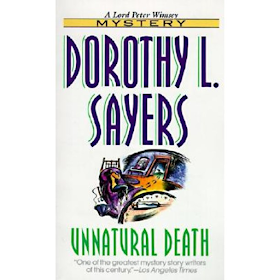
 Unnatural Death by Dorothy L. Sayers HarperPaperbacks,  Original copyright 1927

Provenance: The Crazy Book Lady, a used bookstore in Acworth, Georgia. I wanted to pick up a back-up book when I was down there (you readers know what I mean - a book for just in case I finished the book I was reading). The shop is in a small mall off the main road, noted only by a simple sign declaring "Books", and also handles U-Haul rentals. Could not find the next Mick Herron book, and did not feel like another LaCarre, but did stumble across a Sayers that I had not yet read.

Review: Let me digress immediately. I always found the Bogart version of the Big Sleep (1947) interesting for many reasons, and one of them is the power of women in the film. Bogart is Phil Marlowe is at the center, sure, and we also have the old General's two daughters (Lauren Bacall and Martha Vickers, who throw themselves at Marlowe) but also the chief villainess (Agnes Lowzier, who does not), and Dorothy Malone as the bookstore owner who looks beautiful without her glasses. And a female cabbie (Joy Barlowe) for a short bit. And what struck me at the time was that Bogart/Marlowe just pops into the cab without giving the fact it was driven by a woman a second thought. It is a movie, though with a male lead spends most of his time interacting with women.

And that is the same vibe I got from Unnatural Death. Yes, Sayers did a great women-centric book in Gaudy Night, and some day I may even talk about it. But the plot of Unnatural Death is controlled by its women, and Lord Peter Wimsey and his buddy Inspector Parker are often secondary and reactive to their actions. I fact, most of the men come off as second-best - they are there where their positions of power, banned to women, are needed (doctors, lawyers, law enforcement), but are come off the worse for wear (haughty, pedantic, and/or fools).

Let me lay out the plot in brief. This is the most murder-mystery-like of the Lord Peter books in that it obeys a lot of traditional tropes. By this point in his career Lord Peter has established himself as an effective consulting detective, making mysteries and murder his habit. A discussion of "perfect murders" that no one even considers a crime occurs, boosted by a chance encounter at a restaurant, which puts him on the case. An old woman dies. She has cancer, but her demise is still sudden. She has stated that her Grand-Niece inherits all, but refuses to make a will. And there is enough little weirdnesses around the situation that Lord Peter, with Parker in tow, investigates. 

And part of that investigation is assigning a female operative to the deceased's home town. Miss Climpson is a proper, dedicated, older, single woman with a High Anglican background and a rational mind. Peter puts her in town so she can ask questions that a man would not get proper answers about. And she falls in with the gossipy small-town lift of the community and shows herself to be every proper bit an investigator (by the way, she apparently predates Miss Marples by a couple years, though she is late to the field of Lady Detectives in general). The end of the book  is a cascade of her convincing herself to put herself in harms' way while Wimsey and Parker are still sorting out threads.

And there is a lot of queer-coding going on here. Many of the women have no declared use for men and are pretty happy with that - they are fish without bicycles. And a number of them have better relationships with other women. The elderly deceased had a healthy and active relationship with a suspect's grandmother (who was (coding) an expert horsewoman). Peter's chief suspect leaves town with a younger woman, intent on purchasing a egg farm far away from any of the people they know. The phrase "equal of any man" is invoked a couple times, and always making the male speaker look like a fool. For a book almost a hundred years old, there are lot of signposts out there, and the question arises if there it was as obvious back then as it is now.

The murder itself (and yes, there was an initial murder - if fact, several over the course of the book) ages less well. The method of dispatch is obvious to our modern eyes, since we have seen it played through so many times in popular media since (along with questions of how effective it would actually be in the real world). Wimsey pieces together the clues with glacial slowness, complete with a moment of "Ah! I had forgotten about this one piece of then-public information" that provides a motivation as to why the old woman had to die RIGHT NOW as opposed to letter nature (and cancer) take its course.

All in all, it is Sayers, and as such has a richness and depth of Interwar Britain. In this case, the sudden downturn of the male population in the years after the war, and the challenges and opportunities that presented to women. As always, worthwhile.

More later, 


Sunday, October 13, 2024

New Arrivals: PreConventional Entry

 So later this week I'm heading out to Gamehole Con in Madison, Wisconsin, along with a whole host of friends, colleagues, fans, and fellow professionals. So I want to get all this out the way before I add more to the pile.

The vast bulk of these come from Kickstarters resolving, and arriving on the doorstep. So I may comment on the process as well as the product.

Let's start.

Ryder's Intergalactic Guide to Robots by Jake Parker, JP Creative, 128-page landscape-formatted softbound, 2024, Kickstarter. Jake Parker did Kepler's Guide to Spaceships last year, and I thought well enough of it to get the next volume. Parker wraps a story around a collection of autonomous robots, worker mechs, AI-guided vehicles, and warbots. I love the variety, and am sure there is a full universe in here somewhere, just waiting to come out.

Sentai & Sensibility, by Bug Boll, 9th Level Games, 108-page digest-sized softbound, 2024, Kickstarter. This is one of the stranger games I've picked up, but I'm glad I have. It's a combination of Japanese tokusatsu (live action with extensive special effects) with Regency Romance, in Boll's words, "Power Rangers as written by Jane Austen". You are one of the Gentlefolk (gentry), who can become a heroic Ranger when danger threatens, and with the rest of your allies (sentai) you combine to form a colossus (Voltron) to battle kaiju (giant monsters). The rule system is interesting in that your class (Station) determines the die you roll, and different type of challenges (Dance Moves) require different results, such that the physically weakest class is also the best at social interactions. The challenge is that all of this is buried under a mass of unique terminology set for the Regency era, so you're learning new terms to go with new mechanics. The Kickstarter comes with a deck of cards (characters, classes, and rules) and some standups, which are very nice, but now I have to make sure they don't get separated in my mess of an office. 

The Electrum Archives Issues 1 & 2 By Emiel Boven and Ava Islam, Cult of the Lizard King, 70-page and 78-page Digest-sized softbound books w/ four-panel paper maps, 2024, Kickstarter. This is a game system masquerading as a campaign setting. It is set in Orn, a desertified world that has seen several rulers and conquerors (and their ruins) over its long history. It is alien in many ways, and its magic runs off of ancient ink, which is also the coinage. Five attributes, three character classes, and a whole lot of weirdness which really tickles my Tekumel-based biases. The rules are presented cleanly and clearly, and while the players need a bit more investment (Spell names are random-rolled, and you get to figure out what they mean with your GM/Seer), it looks absolutely fascinating. My only gripe? I saw it for sale at GenCon a month before I got it in my hands. Yeah, it would be nice for the original funders to get their copies. 

Historica Arcanum: Era of the Crusades, Sarp Duyar &  Doga Can Sayilkan (Project Leads), Meta Creative 272 page hardback,  and Historica Arcanum: The Sigil of Jerusalem,  240-page hardback, two full-color maps, slipcased, 2024, Kickstarter. Meta Creative, out of Istanbul, rates up there with Free League for producing beautiful-looking books. They've concentrated on historical fantasy, expanding out the 5E system into Cairo and Jerusalem in the 13th century. There are new classes, the the system is growing outwards with new Professions, and a Deck of the Damned to make combat more stressful (with the stress mechanic developing in a similar fashion to CoC's Sanity Rules). Sigil of Jerusalem repeats some of the player-facing material, and launches into a conspiracy in Jerusalem itself.  Metis does itself a great favor in its release schedule, as this showed up on my doorstep JUST as they were launching their new Kickstarter. 

Campaign Builder: Castles & Crowns, by Richard Green, Tim Hitchcock, Brian Suskind (Lead Designers), Kobold Press, 272-page hardbound,2024, Kickstarter. Kobold hews closer to 5E than a lot of the other D&D Descendants listed here. This is the second volume of their Campaign Builder series, and deals with the elites - nobility and the court. And it is a toybox of new heritages, subclasses, settings, factions, kingdom types and monsters. It works closer to traditional Western European D&D, but has a lot of good foundational material for kingdom building. Yes, I Kickstarted this, even though I could have mooched a copy off chief Kobold Wolfgang Baur, but I wanted to see what was in it. 

Never Going Home by Braden Aten and Matthew Orr, Wet Ink Games, 118-page softbound, 2019, Purchased from Grandcon (Grand Rapids) from Pete Petrusha, who had a booth there, This was originally Kickstarted, but I don't know why I didn't go in for it at the time. It is an original system using both dice and cards for resolution and resources. The setting in 1916 in the trenches of WWI. In the Battle of the Somme, a tear between worlds has unleashed a horde of nastiness on the battlefield. Where your unit is. Your squad has to deal the the atrocities of the battlefield as well as horrible things that crawling into our reality. 

Sol System by a small host of talented people, Green Ronin Publishing, 112-page softbound, 2024, Midgard Comics. Designed for The Expanse RPG, this is very much an old-school sourcebook, with tons of subject matter and just a smattering of RPG rules. It handles a lot of the factions, corporations, religions, and criminal operations in the sol system, an expansion of the trade rules from the original book. This is much more in the "readable" column than the must use to play column, but given that the company is upgrading the core rulebook to handle the current situation in the universe, it's pretty cool.

Astro Inferno by Andreas Ruu, Haxan Studios, 384-page hardbound, 2024, Kickstarter. Astro Inferno is the most recent arrival here, and requires a bit more thought. It is both stylish and convoluted. Set in a post-apocalyptic demonic SF universe, it uses a lot of unique mechanics and, like Sentai & Sensibility, buries them under a mass of setting-related names and descriptions. It is a beautiful art-game, with excellent production qualities, and a variety of hard-to-read fonts, including that jagged-lightning typography favored by heavy metal bands. Long ago, at TSR, we received a copy of Wraith, from White Wolf, which used this iconography for its cover, and could not decide what the title was - we finally settled on "Noseroids". It's the same thing here. Yeah, this one's going to be a tough climb to wrap my brain around.

And that's it for the moment. I will be at Gamehole Con later in the week, and will probably find some more cool stuff there. 

So definitely More later. Noseroids.


Tuesday, June 30, 2026

Book: Women in Their 20s

 Bobbed Hair and Bathtub Gin: Writers Running Wild in the Twenties by Marion Meade, Harcourt Books, 2004

Provenance: Unsure, but from the pencil marking on the inside cover, I'd guess Half-Price Books. It looked like an overstock as opposed to a truly used book. 

Review: First off, bad title. The hair style of the title make is only glancingly noted, and references to bootleggers and speakeasies are mostly incidental. It doesn't exactly scream 1920s, but maybe. The secondary title is kinda incomplete as well, since we're going to be talking about four women who write as opposed to everyone else in the field. Only when we get to the third sub-title down do we address who we are talking about - Edna St. Vincent Milay, Edna Ferber, Dorothy Parker, and Zelda Fitzgerald. Important female writers of the era.

OK, quick summary for those under 100 years old: Edna Ferber was a popular and award-winning novelist who is best remembered for her Broadway adaptations (like Showboat, which you may have seen in high school productions). The other Edna - St. Vincent Milay, known here as Vincent, was a popular poetess. Dorothy Parker made her way on essays, short stories and sniping reviews in the nascent New Yorker. And Zelda labored in the shadow of her husband F. Scott, who wanted to be more successful than he was. 

They were not a group. They were not a movement. They worked in different spheres. They attended some of the same parties, but direct encounters between them were few and unmemorable. They all worked in the hothouse environment of New York City literati in the 20s, a neatly-compacted decade that ran from the creation of Prohibition to the Crash. 

And we have a lot of information about these writers because they were wrote everything down - diaries, notes, letters, and stories on things based on their lives. Moreso, since they ran about with a bunch of other writers, we have all of their notes, diaries, letters, and stories as well. The end result here is a chatty, gossipy, personal, and in places honestly bitchy presentation of the 20s in New York City. And Europe. Because post-war France was a great, cheap place to escape to if you were a member of the Lost Generation and had the petty cash. 

The book itself travels through the decade year by year, and concentrates on the lives and adventures of its subjects. Alcohol and abortions. Insights and illnesses. Trysts and travails. It gives a good scan of their growth and success as writers, but also the pitfalls of their craft - writer's block and problematic relationships and too many house parties and summer homes. 

All of the writers have their own arc and some sense of resolution. Ferber got a Pulitzer and showed you could succeed both commercially and literarily and ended the decade hosting small parties at her penthouse. Milay ascended into poetic godhood, retreated to the country, and pursued a young muse with her husband's permission. Zelda suffered under F. Scott (who comes off as complete asshole here), who only started to support her when she went into physical and mental decline. And Dorothy kept plugging along through boom and bust times, just writing. Of the group she's probably the best-remembered, owing the wit and meme-worthiness of here poems and short works.

The past is a foreign country - they do things differently there. I'm a fan of the 20s, which dovetails neatly with my interest in the Call of Cthulhu RPG. From this volume I've picked up that a trans-Atlantic cruise was not THAT big a thing if you had the money, and at the time, writers were actually being paid more (An easy conversion was to multiply any figures within by ten). There are a lot of bits and bobs here that I may find use for elsewhere, and you might as well. 

In the meantime, I've excavated a collection of Dorothy Parker's short stories from the basement library, and intend to curl up with that. 

More later,


Friday, October 09, 2015

DOW breaks 17000!

Well, that was fast.

Martin Luther King, Jr, paraphrasing Unitarian minister Theodore Parker, said "The arc of the Moral Universe is long, but it bends towards Justice."* The arc of Modern Wall Street is much, much shorter, but it too bends upwards towards a higher rate of return.

I mean, why the recovery, and so quickly? Greece is still as much a mess as it was back when we dipped into the 15000s a few weeks back. China's stock market is just a wobbly. Saudi Arabian investments are being reduced as they keep their oil prices low enough to close down the Dakota Oil Shale operations (successfully, as there are fleets of mobile homes now available on the cheap out there). Austerity hawks still circle despite the proven failure of that approach. Congress is just as dysfunctional, and all these lefty operations on the West Coast are raising wages and reaping low unemployment rates. Yet now we're back.

I believe, inherently, that we have trained certain markets to move inevitability, but not smoothly, upwards. The market is overheated because we are willing it to be, and the rise of various tech or housing or stock bubbles are a feature, not a bug, in the system. We talk about corrections, but until that point where we pitch ourselves into a full-bore, we-cannot-ignore-it, mile-wide-steamroller of a recession, the trend line is inevitably upwards.

My own gut check for economic health, by the way, is my commute. The worse it is, the better things are in general. And for the past week, traffic has really, really sucked, for reasons I cannot fully fathom. I think it may be tied with the shortening days, such that people who are used to rising with the first light suddenly are confronted with the fact that this first light is much later in the day. I may be tied to the return of school, which regiments when children have to get out the door, and as such puts an addition timer on the adults. But I do think that it is because we have crossed a threshold where the infrastructure itself is taxed by the increased load of the employed, who all, apparently want to get on the road at the same time I do.

But that's a just a theory. In the meantime, the DOW has restored itself, until the next correction.

More later,

* What Theodore Parker did say, nesting his semicolons neatly, was: "I do not pretend to understand the moral universe; the arc is a long one, my eye reaches but little ways; I cannot calculate the curve and complete the figure by the experience of sigh; I can divine it by conscience. And from what I see I am sure its bends towards justice." which is a darn sight better than the current attitude of "Past behavior does not guarantee future performance"

Friday, April 24, 2015

Theater: Local Hero

Lizard Boy written and composed by Justin Huertas, Directed by Brandon Ivie, Seattle Rep through 2 May.

This one had a lot to live up to. The Lovely Bride saw an early draft of it a year ago in the New Play Festival at the Poncho (a performing space in the REP) and loved it. She went to the tech rehearsal the week before opening and liked it even more. And she's been talking about it for a while. So this one had a lot of front-loaded expectation to it.


And (spoilers) it lives up to those expectations. This is an excellent play with excellent performances. It is also a strange thing: A personal, private musical, firmly entrenched in a particular time and place. On one hand, I could see this going large, getting a special on Netflix, or a fair time off-Broadway followed by a 40-city run. On the other, it fits so snugly in the pocket of Seattle, circa the second decade of this century, I don't know if it would play the same way in Omaha or Chicago or even ten years from now.


Lizard Boy is a three-person musical about a gay superhero who plays the cello and draws comics. To quote said hero - "Whaaaaaa?" Justin Heurtas is Trevor, who was bathed in dragon's blood (the dragon having escaped from Mount St. Helens - shades of Shadowrun) and has a lizardish skin condition as a result. He's a bit of a folk hero (there's a "Lizard-Fest" in the play, where people dress up like him - not something unusual for a city that sees cosplayers from PAX, Sakuracon, and Emerald City Comics Con in its downtown). He has also spent the past year in his room as a result of a bad relationship. He contacts Cary (a lovably goofy William A Williams) over Grindr (a gay hookup app) for an awkward first date that involves Dick's Burgers and the Crocodile. At the club he encounters Siren, the "Girl of his Dreams" (both literally and in the pages of the Stranger), who is a tough-talking, hard-living singer who has a deeper connection with Trevor. And then dragons attack.


And it all works, pretty much. It is not so much an origin story or a coming out story as it is a coming to terms story. Lizard Boy hides his lamp under a bushel, and only when pushed does he discover his abilities. Sort of Peter Parker if he had decided NOT to become Spider-Man. The story itself shuttles from pillar to post with numerous flashbacks and "meanwhiles", but does so effortlessly and including the audience in its motions. Cary and Siren do support work on-stage when their characters are not in the thick of the action, and there is little dissonance in their presence.


Further, I enjoy the fact that the plot actually moves forward through the songs. No, bear with me on this one. "Traditional" American musicals have a nasty tendency to bring everything to a stop when the music begins. The character states that she is lonely, then launches into three minutes of song about her loneliness, while the audience gets that she is indeed lonely and just follows along with the nice music. There is actual exposition going on in the songs, so pay attention.


There is a stylized nature in Lizard Boy as well, with comic sketches displayed against the background, that works as well. The combat at the end of the play (hey, it's a comic book. Of course there is conflict) is much, much more effective than the comic rolling-about in The Comparables. It is neatly choreographed and more evocative than if the protagonist was web-spinning his way over the audience.


Perfect? No. It has a couple of challenges. Trevor's lizard-boy disfigurement is presented as few green spangles on his cheeks, and it requires a sense of disbelief to grok that he looks radically different, as opposed to a guy with shiny jade freckles. And some of the dancing falls into a trope of more modern American musicals - jarring the floor to indicate emphasis. Stomp has so much to answer for.


So yeah, this is one of the good ones. It is an original, local production, the result of talented individuals at the Rep working and refining the piece. It has a few raw edges, but it occupies a magical location called Seattle at a unique time. Go see it.


More later,


Tuesday, January 17, 2023

This Just In: Holiday Gift Wrapup

This latest batch of games and other stuff is interesting in that they are mostly not things I paid money for. And by that I don't mean I-got-it-on-Kickstarter-so-I-already-paid-for-it (and kicked in a bit more for shipping) but rather stuff that has tumbled into my lap as gifts. Here's the latest batch.

Zenimax Zippered Sweatshirt (Black with Zenimax logo on front)- This was a surprise holiday present from my new employers at Zenimax Online Studios. Oh, yeah, for those that don't follow my LinkedIn account, I have a new gig as a senior writer/designer at Zenimax. working on Elder Scrolls Online. Cool beans (and a nice pullover as well).

Midgard Worldbook (Wolfgang Baur, Richard Green, Dan Dillon, Chris Harris, Jeff Grubb, and Brian Suskind, Edited by Michele Carter, Kobold Press, 464 page hardbound book). I already have a copy of this book. Heck, I wrote (small) parts of this book. When Wolf was cleaning out a work area, he found an extra copy of the leather-bound, gold-foiled stamped edition, and passed it along. Which gave me the excuse to cruise through it again and wonder at how great is it. Midgard, the "home campaign" for Kobold Publishing, is a world full of worlds. Broken down into various broad areas, it not only reflects different cultures, but different styles of play as well. History, species, gods - regardless of your play style, there's something here for you.

Spelljammer (Christopher Perkins, Wizards of the Coast, three 64-page hardbound books with DM's screen, in Slipcase) Hang on, Jeff, I hear you say, didn't you already talk about this one? Well, yes, but Chris Perkins over at WotC was kind enough to pass along the "standard edition" of the setting, which is the same except for the art on the slipcase. I've had more of a chance to peruse what they have, and to a great degree it has grown on me. Yeah, there needs to be a better ship-to-ship combat systems, but back in the day we really did improve the basic system in original Spelljammer set with the later War Captain's Companion. This feels foundational, with a lot of room for individuals to grow and develop it.

Blade Runner RPG (Tomas Harenstam and Joe LeFavi, Free League, 232 page hardbound book) and Blade Runner Starter Set (Tomas Harenstam and Joe LeFavi, Free League, Boxed set w/rules, adventure, dice, cards, maps) I swear that Free League is either getting a subsidy from the Swedish government, or is secretly owned by a printing company/design house, since the company has some of the BEST looking products in the business (In addition to this one, we're looking at The One Ring, Vaasen, and Tales from the Loop as examples). Nice art, great production values, solid rules. Blade Runner pushes itself as being a dystopian SF world, and I don't think you escape a single paragraph in the book without being reminded that the future sucks, in particular for you.

John Company, Second Edition, A Game of Nepotism and Bureaucracy in the British East India Company for One to Six Players  (Cole Wehrle and Drew Wehrle, Wehrlegig Games, Boxed Game ) I've been spotty on doing board games from Kickstarter, if only because I have a couple boxes down in the basement that I intend to get around to playing some day. John Company is one of those games I supported on a whim, and upon delivery, I realize I may have bitten off more than I can chew. The box is crammed to the point where the lid does not quite fit. And the intro rules strongly recommend I spend a quiet hour, undisturbed, with a pot of coffee (what, no tea?) to puzzle them out. In the game you control a British family working for the East India Company (the John Company of the title), and maneuvering around others in order to set your familial line up for success and avoid total disaster. This is quite simply a labor of love - the game components and impressive and well-rendered, and even the box itself it artistically rendered. However, I am daunted by its sheer impressiveness. Reminds me of those long, engaging SPI/AH games I have on the shelves downstairs.

Kepler's Intergalactic Guide to Spaceships (Jake Parker, JP Creative, 128 page softbound book) I've also been hit and miss with art books - some good, some just average. Kepler's is just really, really good, and I found it a delight leafing through it. It is collection of various ship types, with commentary by Kepler, a four-armed starship mechanic. The ships themselves are pretty cool-looking and the world that is revealed by their descriptions (and the comic story that threads them together) is intriguing. My one regret is that these need more stats and a system for interactions (like ship-to-ship combat). In short, it would be a perfect setting for an RPG. Came with a calendar, two stickers (one bumper, one laptop) as Kickstarter tchotchkes. 

Court of Blades (Shawn and Navi Drake, A Couple of Drakes Publishing, 328 page hardbound book). There's a lot of discussion going on about D&D's OGL right now, but one thing it accomplished in the past 20 years is set the limits of the d20 system. And in doing so it allowed for a new generation of radically different RPGs. The Forged in the Dark system is one such solar system of RPGs, which depowers the GM, increases continual player interaction, and creates a more cinematic space of play. I've had the chance to play a few of these, and while I think it would a challenge for my grognard nature to run them, I really appreciate them. The system itself concentrates on one type of adventure, but as a result allows a wide variety of games to evolve from the core system. We have heists, military campaigns, space smuggling, and in this case, courtly intrigue. It describes itself as Gunpowder Diplomacy, the coterie of players represents servants of a particular noble house they are supporting, and would be comfortable from Shakespearean tales to the Three Musketeers. The rules follow the formatting of other Blades products, so if you are familiar with one, you will be able to follow along here, and the artwork is excellent. 

Downtime in Zyan ( Ben Laurence, Through Ultan's Door, 36 page pamphlet 'zine). After raving about the art and production values of the previous three items, I have to come clean and admit the art for this latest addition to Through Ultan's Door is below the quality of its predecessors. It is drawings of fantasy mole rats in a style similar to Adventure Time cartoons. But the subject matter and quality redeems all things. The entire subject involves what do do in the down time between adventures, including investment, social relationships, training, carousing, and spell research. We've all taken stabs at doing things between the sword-swinging, and this gives a great structure and some room for thought about entire process. Recommended. 

Secrets of Los Angeles (Peter Aperlo, Chaosium, 2007, 192 page softbound book) This was a gift from fellow creative Steve Winter, who discovered he had two copies and offered me one. My affection for the Call of Cthulhu RPG is well-know, and my shelves are starting to groan with the wide variety of products published over the years. But I have a special place in my heart of the layout and graphic design of the black and white sourcebooks they produced. Texturally dense but divided into bite-sized nuggets, with photos of the era and a large amount of sidebars, this is a grand tour of 1920s LA, along with two short scenarios to drive you players mad with. Yeah, I'm a softy for the presentation, the subject and the era (spilling over into the hard-boiled 1930s).

That's enough rambling for now. I think I need to settle down with a little light reading in Midgard at the moment.  

More later,


Thursday, April 07, 2022

Books: Beyond Bond

 Forever and a Death by Donald E. Westlake, Hardcase Crime Imprint, Titan Books, 2017

Provenance: A gift from the Housemates. They have been here a year, and in thanks, Anne tracked down a pristine copy of the Lovely Bride's Favorite Cookbook, the Better Homes and Gardens cookbook from 1976. She had worn the previous version to tatters, the spine shattered and the pages held together with a thick rubber band. In addition, because I have been reading some Westlake, she hunted down this edition for me.

Review: Westlake is an impressive author. There is the funny Westlake that's on display here. There is the hard-boiled Westlake of the Parker stories. And here we see the action-adventure Westlake.

This is a lost manuscript found among the writers' papers, written sometime between 1997 and the author's death in 2008 (though probably towards the start of that period). Westlake had been contracted to write a treatment (an outline, effectively) for a new James Bond picture. The work came to nothing ultimately, but the author liked a lot of the component parts, and refashioned them into this book, published by his estate.

And while it is a very different book, the spirit of James Bond (the movie versions) hangs over it.

What was kept? The exotic locales, the master plan, the super science, the plucky young woman (a blonde scuba diver here, but Asian in the treatments). Bond himself is missing, replaced by more of a ensemble of characters, including a two-fisted engineer, the aforementioned young woman, a gay pair of environmental activists, and various members of police forces scattered across the southwestern Pacific. 

Here's the summary: Richard Curtis (no relation) is multi-millionaire running on economic fumes. He lost most of his fortune when Hong Kong was returned to Chinese rule in 1997, and has an outrageous plan for revenge. He intends to rob the banks in Hong Kong of their gold reserves, then pull down the buildings behind him in a way to cover his tracks. To do this he has an earthquake machine, created by two-fisted engineer George Manville, who is unaware of the plot. They are testing the earthquake machine on an abandoned atoll at the north end of the Great Barrier Reef. The Greenpeace-like activists arrive, and the plucky young woman puts on her scuba gear and swims towards the island, hoping to convince them to call off the test.

They don't, and the island is leveled. The plucky young woman is assumed dead, but is instead pulled out of the ocean by Curtis's yacht. She and the two-fisted engineer hook up and discover that millionaire is up to no good. They manage to escape and the rest of the book is various members of the group criss-crossing the South Seas (Sydney, the Outback, Taiwan, Hong Kong, Singapore) trying to discover what exactly the nefarious plot is and how to foil it.

But what is interesting (and very non-Bond) is that Westlake spends a lot of time inside Curtis's head. He's the secret protagonist here. He thinks nothing of the devastation he will unleash on the landfill islands of Hong Kong, but has to steel himself to kill (or at least order the deaths) of individuals like the plucky young woman and the two-fisted engineer. You can see every step he takes as he moves into full super-villaindom, and it is the most interesting thing to watch.

Its a genre tale, and there are some things that place it firmly within the genre. There are way too many cases of chance encounters and people being right there when they need to be (including a case where the environmentalists and the millionaire are on the SAME PLANE flying to Singapore). There are gay characters (yay) who are mostly tortured or killed (not so yay) because the leads can be threatened but never killed. And there are a lot of office meetings with various police agencies and lawyers as they attempt to prove that the evil millionaire is up to no good.

So how is it? Its better in many ways than a Bond film. It holds together for all its serendipitous plotting. And its a good thing to see it see the light after all these years. And yeah, its a lark, a genre peace, but shows the versatility of Donald Westlake.

More later,  

Sunday, June 05, 2016

Comics: Yaheydere, Hydra!

Steve Rogers Captain America #1 written by Nick Spencer. Art by Jesus Saiz, Marvel Comics.

This is the one that has kicked up all sorts of dust. In an industry where bumping off Superman is a semi-regular feature, the reveal at the end of this one has caused massive internet rage. Which is a pity, because it is a very well-written book.

I've been a Marvel fan for many years, though I will freely admit that there are entire wings of the company I don't pay much attention to. I fell out with Peter Parker when they diabolically annulled his marriage to Mary Jane, and lost touch with the X-Men when it seemed like there were just too many of them. But Cap's pretty much been along for the entire ride since college, even including some of the stranger eras. Captain America is a favorite character, but I recognize that one of the reasons is that he is continually challenged, and rise up against those challenges. 

Here's the spoilerful summary. If you don't want spoilers, look away!

We start in a flashback - 1926, where Steve Roger's mom is being slapped around by her abusive husband. Mom and Steve are rescued by a woman with a kind heart and impressive martial arts skills. In the present Captain America fights a bunch of Hydra thugs on a runaway train. Driving the train is a young man who, like Steve, comes from an abusive home, but he ended up in crime, and eventually was recruited by the Red Skull. Cap stops the train, but the young man says "Hail Hydra" and blows himself up anyway. Then, along with two small-time patriotic heroes, Jack Flag and Free Spirit, Cap goes after Baron Zemo to rescue a scientist. Baron Zemo is defeated by Cap and Jack Flag, but Cap is unhappy Jack is there to help. We bounce back to 1926 one more time, where the mysterious guardian angel reveals she works for Hydra, and recruits young Steve Rogers into their ranks. Back in the present, Cap pushes Jack Flag out of the aircraft to his supposed death, then utters in the final panel "Hail Hydra."

Duh-duh-DUH!

So, has Captain America, symbol of liberty, always been a bad guy! Hydra has been taking it on the chin for years, solely to put Captain America in the deepest of deep cover! It is amazing! Exasperating!  Maddening!

And what really is maddening is that this is a very well-written and well-presented book. It moves smoothly, has a lot of character moments, and feels firmly grounded in the Marvel Universe. Parts of the subplot involve a recent pan-company team-up involving the Cosmic Cube (which, um, changes reality, so that may be a hint to what's going on) and also drenches itself deeply with Captain America lore (including the fact that minor hero Jack Flag had been a member of the Guardians of the Galaxy). Also, comparing the situation of young Steve Rogers and the Hydra suicide train driver strengthens the main character, so the final reveal doesn't drop totally out of the blue.

The book is extremely texturally dense. We get a full-page rally speech by the Red Skull that you could actually see someone buying into. A two-page Maria Hill/Sharon Carter debate that frames the challenge of SHIELD in the modern world while passing the Bechtel test. Breakroom camaraderie between Flagg, Spirit, and Rick (Everyone's sidekick) Jones. Even a flippant, almost comic, Baron Zemo, who comes across as playing by an outdated rulebook.

The art is excellent as well. The flashbacks are duotintes in shadows and bright red. There are a huge number of characters in book, and they all have their own feel and personalities. The moment-frozen combat with the Hydra thugs is impressive. Great art here. 

And I think that's one reason that people are upset by all this. Spencer and Saiz sells the idea that Cap is a traitor perfectly. They set it up how someone can go over to the dark side, show the moral qualms with dealing with superheroes, and they deliver that final punch. If it was less well-done, there would not have been so much anger and so many pixels spilled on Facebook.

Hydra have become Nazi-analogs for our fictional world. And while they first showed up inspired more by Dr. No than the Third Reich, they were founded/controlled by a bunch of former Nazis like Baron Strucker, so, yeah, close enough to army work.  But what Hydra hasn't had previously has been much of a pre-WWII heritage. Yet here they are in 1926 running the equivalent of the German American Bund. And from some the guardian angel's comments about how Steve will someday be remarkable, I smell time travel. For a story that really did its homework, the timeshifted Hydra is odd.

I was so upset I made a meme about it
The other weirdness is the Red Skull in the basement. The Red Skull is currently one of the most powerful telepaths on earth, having had the brain of Professor X surgically implanted in his skull (don't ask. just ... don't). Yet he's running a rally in some basement? OK, that's weird, but so was Kingpin running a Las Vegas gang for the Red Skull, and that's canon as well.

Now, this may all go away next issue, comics being what they are. But Marvel has been resisting that particular reset button trope of late. They brought the original young X-Men into the present, and everyone assumed they would send them back. They haven't. By the same token, they did an entire universe reset recently where some things changed (Tony Stark was a bad guy, Kitty Pryde became a cosmic became being. Everyone knows that Matt Murdock was Daredevil - none of those things are true anymore). but others did not (Sabertooth is a good guy, Iceman is gay). What this gets as a result is a sense of uncertainty among the fans - How long is this Hydracap going to go on?

Its a good book in that it raises the stakes to an incredible degree. and does it effectively, hitting readers so emotionally that they have have had an amazing reaction, even if that reaction is anger. Now, comic book universes (and Marvel in particular) have been good at setting things like this up, but lousy at resolving them. So I really want to see how they (and Cap) work their way out of this one.

More later,

[UPDATE: So, issue #2 showed up, and the winner is ... Cosmic Cube Mind Control! Cap hasn't been a Hydra agent all these years - he just THINKS he's been a Hydra Agent all these years (and given the damage he's done to Hydra, that must mean he's the WORST HYDRA AGENT EVER). The title of the second issue should be "How I Did It by R. Skull" and consists of an involved tale of how Mr. Skull befriended a small child who was really a cosmic cube and convinced her the right thing to do to help people was to make them Hydra agents ('cause Hydra is cool!). The issue also declares the recent SHIELD attempt to mind control bad guys and turn them into the road cast of the Music Man (Another horrible idea) was also part of the plot.

OK, it's not time travel, and it is a pity when fandom's ideas of what happened are cooler than what turned out. Still doesn't explain fully why the Red S, who has the mental powers of Professor X, is mucking about with such a convoluted plot against Captain America when he has, well, the brain of Professor X at his disposal. They sort of put a lampshade on this in the text, with a couple characters asking, a la Scott Evil, Why Don't You Just Shoot Him? So, like the Red Skull in the basement, it is still weird.

As mind control, I wonder if they are going to get into the cognitive dissonence that Cap will face where his past actions don't line up with his current mindset (Punch Hitler? Why would I ever punch Hitler?). On the other hand, if Cap remains a pillar of virtue, wouldn't there be a threat that he would turn Hydra into a voter registration and daycare center? That he would not take over the organization and use its resources to help the flood-ravaged counties of West Virginia? I don't know if he would do either, but if he does, you read it here first.]


Friday, October 21, 2022

Book: Through A Lass, Darkly

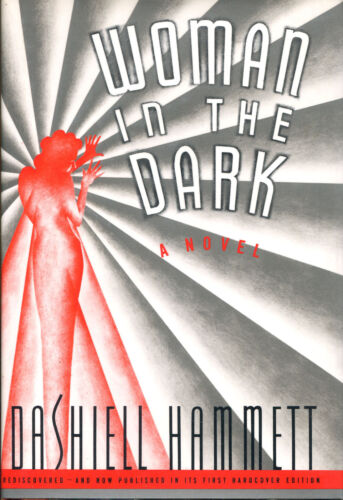
 Woman In The Dark by Dashiell Hammett: A Novel of Dangerous Romance, Originally published 1933, Alfred A Knopf. 1988.

Provenance: Purchase from the Tacoma Book Center. The Book Center is a small bunkerlike building in the shadow of the Tacoma Dome. However, it is a TARDIS, in that once you enter, you find walls upon walls of books, concealed levels and hidden back rooms that seem to go on for much longer than the building itself. The shelves are high, overstuffed, and extremely well-organized. Eventually, once the light rail from Seattle gets down there, the neighborhood will be upgraded to the point that a bookstore like this would no longer be able to afford its space, and it will become a Chipotle or something, but in the meantime, it is a place that I go to find stuff I cannot find elsewhere.

Review: This book is very slight. To call it a novel is to seriously round up, as it was originally a three-part short story published in Liberty magazine in 1933. Tack on an intro by mystery writer Robert B Parker that ties it into Hammett's relationship with Lillian Hellman, bump up the spacing, give it wide margins and a header bar, and ... it's still a very slight book.

The story itself is Hammett distilled down to its basics. It almost feels like a script treatment padded out to a magazine submission. It is seriously a three-act structure. Chase the hero up the tree. Throw rocks at him. Get him down. Brazil, our hero, is in his cottage with his girlfriend when a babe in a tattered dress stumbles in, followed by her politically powerful boyfriend and one of his goons. Fight breaks out, the goons is injured, maybe fatally. Girl and Brazil go on the run because he can't go back to prison, but the powerful guy's people catch up with them. Brazil takes a bullet, looks like the bad guys win, and then we rally and get a rapid (one-page), last-minute denouement. 

It's Hammett at the core - Brazil is a tough former con who has his own code but sticks his neck out for nobody. The babe is the powerful guy's mistress on the run, doing what she must to survive. The cops are corrupt, the little people helpful criminals. The powerful guy? Psychotic but with pull. The writing? Punchy. It could have been a movie in 1933. 

It's lesser Hammett, but still Hammett. Probably exists in some collection of shorts as opposed to a single hardback. A good read, but nothing to go out your way for. Nice a discovery in a used bookstore that is bigger than it seems to be, and that's it.

More later, 

Thursday, December 16, 2021

Book: Jail Break


Help, I'm Being Held Prisoner By Donald E. Westlake, Titan Books, original publication 1974

Provenance: Half-Price Books. When I am in a used bookstore, I check the mysteries to see if there are any Rex Stouts I am missing. In the same area of the alphabet I found this Donald Westlake in trade paperback format.

Review: So, Donald Westlake is an incredibly accomplished author, and wrote the original Parker novels. He also wrote the novel The Hot Rock, which became the film of the same name with a screenplay by William Goldman, starring Robert Redford, George Segal, Paul Sands, and Zero Mostel. Funny movie. So if you want funny crime stories, Westlake has you covered. And the original publication of this book falls hard on the heels of The Hot Rock movie, so there was probably a demand of funny crime stories.

And it is a prison fantasy, in that it takes place in a prison, but is scripted in a way that breaks your sense of reality if you think about it too hard. 

The unfortunately-named Harold Künt (with an umlat - it just gets worse the longer you look at it) is inveterate and uncontrollable practical joker whose latest stunt on the Long Island Expressway gets him sent up the river for a short stint. He falls in with a band of tough guys who have tunneled out of the prison, but they are not planning an escape. Instead they leave the prison, commit a few crimes, go out to dinner, take in a movie, then come back for roll-call. Harold accidentally and easily crashes the party, and after some deliberation, the tough guys take him in because they have a big plan - they are going to knock over not one, but two banks in the town the prison is located in, then come back to prison because that's the last place anyone would think to look for criminals.

And we're ignoring stuff like, you know, fingerprints. Like I said, let's park reality at the door for this one.

Its a fun, light read. Harold is a nervous wreck, trying to keep himself from committing any more practical jokes, plus keeping the gang's secrets, plus dealing with someone else pulling practical jokes and him taking the blame, plus trying to keep the gang from finding out that he is NOT a tough guy, plus desperately trying to keep the gang from robbing the banks. So most of the book consists of him going to greater and greater lengths to keep all the balls in the air. Sort of French farce, with a lot of door slamming, but the doors have bars on them in this case. 

I have to call out the Paul Mann cover of this one, only because, in the tradition of hard-boiled mysteries, it conveys the theme while misrepresenting what is going on inside the covers. The protagonist is a broad-chested he-man dressed up in classic hamburglar stripes (he is not, and the book is set in a period of Folsom prison denims). The babe is all legs and bare;y-buttoned men's shirt (there is a love interest, but not as dolled up) with an obligatory gun - It is something something off the old Carter Brown covers by Robert McGinnis. 

So, it is a fun book, and a nice break from change ringing in the fens of East Anglia, but not one to hunt down. 

More later,

Thursday, November 01, 2007

The Jeff Recommends

So, to summarize:

ST/RTID Proposition 1 (Roads and Transit) - Here's the deal - if we don't pass it, I don't want to see any of you on 405 northbound between 9 and 10, because that's when I need to get to work. Vote YES.

R-67 (Insurance Accountability) - So $10 million has been dumped into this campaign to defeat it, in the name of protecting consumers. How much has come from actual consumers? $700. Vote YES.

I-960 (Supermajority Taxation) - We say government doesn't work, and we want to make sure it doesn't! Another "Give me a pony!" initiative. Vote NO.

ESSJR 8206 (Supermajority Rainy Day Fund) - Let's push some cash away for an emergency, but then make sure we can't get to it. Sometimes I feel that way about the Girl Scout thin mints in the freezer. Vote NO.

SJR 8212(Prison Labor for Profit) - Prison should have to worry about punishment versus rehabilitation, not whether Bennie the Shiv and C-Block has made their fourth quarter numbers. Vote NO.

EHJR 4204 (REMOVE Supermajority for school funds) - Vote YES.

SHJR-4215 (University plays the Stock Market) - This I was wavering on. Do I really doubt the intelligence of a UNIVERSITY to invest in stocks wisely? Um, yes. Yes, I do doubt it. Vote NO.

King County Initiative 25 (Make the County Director of Electors a political race) - Yeah, THAT will make things move much smoother. Vote NO.

King County Proposition No. 1 (Medic One) - Why yes, when I'm have heart pangs, I'd like to have an ambulance. Hell, I'd like to have a transporter. Vote YES.

King County Prosecutor - Both men have good resumes and will likely do a good job, but the GOP candidate keeps trying to hide that he's Republican, stressing non-partisanship while at the same time taking gobs of money from the state party and doing fundraising for other GOP candidate. Vote BILL SHERMAN

Port of Seattle Position #2 - Go for GAEL TARLETON and keep an eye on her.

Port of Seattle Position #5- Keep reformer ALEC FISKEN and give him some support.

King County Assessor - OK, Scott Noble actually made a pun in his Voter's Pamphlet - he's the singular choice. Get it? SINGULAR? Because his opponent is named NOBLES? And they say Assessors have no sense of humor. Vote SCOTT NOBLE.

Public Hospital District #1 - Snake Pit. The incumbents have done poorly with their task, but their opposition is suspect. The foe of my foe is not necessarily my friend. Split the difference with CAROLE ANDERSON and SUE BOWMAN, and get a new CEO, stat!

And on the ones I cannot vote on:

King County Commissioner District Six: Jane Hague. Yep, flawed vessel, the weakness that flesh is heir to, yadayada. But that doesn't make her opponent obviously better (though he does have a Myspace page).

Renton Annexation: Oh, and now we have a City Council dustup where a religious stealth candidate running against King Parker (of King and Bunny's Appliances, up in the highlands) is striking back against a web site targeting her on how most of her support is coming from outside Renton. OK guys, on Annexation, you're on your own here, but you should know what you're getting into.

Feel free to print this out.

More later,

Wednesday, May 05, 2010

More Plugs

As if all the pluggage below were not enough, I've done a podcast with Ethan Parker over at Gamer's Haven, where I ramble on about Marvel Super Heroes, Call of Cthulhu and other bits of madness. The site is here, or you can download it directly here.

More later,

Thursday, March 03, 2005

Comics Stash

The Big Box has finally arrived, and its Evil Not-Twin-Brother Box is outside Spokane as I write this. No, I can't tell you what's in them - yet, but their very presence has caused me a lot of effort so far this week, and will cause spotty communications over the next week or so. However, it was a light week of comics as well, and I wrote the following before Big Box #1 arrived, Here's another spoilerific installment of Comics Stash.

Back when I was a lad, Marvel was the "simple" Universe, and DC was the "confusing" one. DC's stories took place mostly on Earth-1, but the Golden Age ones took place on Earth-2, which was the same as Earth-1 but Superman was around for WWII and you had things like the grown-up version of Robin and two Flashes and real old heroes like Mr. Terrific still hanging about. And there were Earth-3s, Earth-Primes, and Earth-Xs as well, which all led up to the Crisis on Infinite Earths, which solved the problem, except it didn't. Marvel, on the other hand, had the Marvel Earth, and while there were all manner of alternates out there, most of the tales took place in the same universe. This was before the "What If?" story explosion and various future timelines, back when the Avengers fighting JLA clones known as the Squadron Supreme was a big thing.

Nowadays, Marvel exists in a whole heaping handful of universes, all with analogues of your favorite heroes, so there's no bet who, what, or where your character is. Tales from the past, tales from the future, tales from the futures that no longer apply, tales from universes where Spider-Man is a kid again, tales from the past of that universe where Spider-Man is a kid again. Take a dinner plate, hold it out at an arm's length, and drop it. The resulting pattern on the floor represents the state of Marvel Continuity.

Let's start with the Ultimate Marvel Universe, generally a good place for re-imagining Marvel Characters (see previous notes on Ultimate Nightmare). Ultimate Spider-Man # 73 re-introduces Harry Osborn, son of The Green Goblin, giving him some basis to become the Ultimate Hobgoblin, and giving him multiple grudges against Peter Parker and Spider-Man. Pretty good. On the other hand, Ultimate Iron Man #1, written by Orson Scott Card (more stunt casting in the writer's department) robs Tony Stark of his humanity, turning him into a kinda-mutant when his pregnant scientist mom gets infected by a super-monkey virus while carrying him (don't you just hate it when that happens?).

Meanwhile, in an alternate timeline of the Marvel Universe from about ten years back, the bad guy Apocalypse took over the world to create the Age of Apocalypse. Supposedly this future was wiped out, but now its back for the an anniversary with Age of Apocalypse#1 of 6 and the Age of Apocalypse one-shot. Neither adds a lot to the original, except to show a world that rebounded incredibly quickly from the nightmare Apocalypse-world of the first series. Add to this Apocalypso Exiles #60, which sends a band of heroes, whose job it is to bounce between the various Marvel "What If" universes, into this particular dimension. I'm as nostagic as the next geek, but how can I miss it if it won't go away?

So I mentioned the Squadron Supreme, Marvel's pseudo-JLA from another universe. J. Micheal Stracynski (see the last "Comics Stash"), has re-imagined the characters so they are an entirely new universe (so now with Earth-Marvel-Squadron-1 for the old versions, and Earch-Marvel-Squadron-2 for the new versions). Doctor Spectrum #5 is the story of the Squadron's Green Lantern clone, who has an alien power gem mounted to the back of his hand. It is back story while the main tale continues elsewhere.

Marvel Team Up #6 is a relaunch of the old title, though it does not stop at merely teaming up X and Y. The Spidey/Wolverine teamup is tied into a Doc Strange/FF team up which moves to a Spidey/Wolverine's daughter team-up and now a Captain America/Blackwidow/Spidey/Wolverine's Daughter teamup. The big bads in this story arc have been a kid that explodes, a Tony Stark from an alternate future Marvel Universe where he turns into Doctor Doom, and a nasty badguy who stays in the background for the entire arc, only showing up to beat up Sunfire, who doesn't Team-Up with anyone. Its a bit of a muddle, and a good analogy for the core Marvel Universe.

The only Marvel book to stay in its home universe entirely this week is Captain America and the Falcon #13. And in this, an Evil Cap is running around acting like the Punisher working for the Neo-Cons. The Falcon is reverting to his urban "Snap" personality. And the real Cap gets shot in the head by a punk and dies. I'll admit I'm curious about how this turns out.

Over in DC, Justice League Elite #9 is grappling with the same problem as the Invaders over in Marvel - the team is supposed to play rougher than its parent group, but without the common ethics of being "super-heroes", the group has pretty much self-destructed. The team consists of heroes pretending to be villains, villains trying to be heroes, a villain trying to be a hero but turning out to be a villain, and Green Arrow, because Green Arrow is the Wolverine of the DCU and needs to be everywhere, every week. So far on the team we have one death, one suicide, one betrayal, one apparent betrayal, and a lot of carnage without a lot of upside.

Lastly, The Intimates #5 belongs to the Wildstorm universe, an offshoot of DC (The Authority lives there), and deals with a bunch of super-powered kids at super-powered high school. What I like about the book is that it comes with footnotes, making it the most text-heavy book of the lot, but pulls it off in a smooth fashion that works with the storytelling. The theme in this issue is one of teen suicide, and the characters handle it like, well, high school students.

That's it. Big Box has arrived - things will quiet down here for a little while.

More later, but later than you would expect.

Thursday, February 22, 2007

Comics: Uncivil War

So it is two in the morning, and I am up with an upset stomach and I THINK it was something I ate as opposed to the wrap-up of the Marvel Civil War mega-event, but why take chances? This is presented in spoiler-vision (TM) means that I go on with this intro until I reach the point that I get past the cut-off of the RSS feeds, just so I don't give anything away to those who really want to be, uh, surprised.

OK, here's the short version - at least it wrapped up sooner than the Iraqi Civil War, but unfortunately, just about as neatly.

The concept which let up to this dog's breakfast is pretty interesting - there is a superhero disaster in which innocents are killed. A group of superheroes, including the supposedly smartest guys on the planet, decide the best answer is to register all superheroes and reveal their identities. Those that don't go along are hunted down and thrown into a Gitmo in the Negative Zone. Iron Man leads the pro-registration group, while Captain America leads the rebel forces. I've said before, it is not a left-versus-right argument, but rather one of head versus heart - the thinking heroes against the feeling heroes. Spider-Man starts in one camp and ends up in the other.

And the thinking heroes have been at a disadvantage since they are forced into all sorts of twisted rationalizations to support this Very Bad Idea, often going back on their very core ethics in order to pull it off (Mr. Fantastic, who STOLE A ROCKET at the start of his career, stressed the importance of obeying laws, even bad ones. Tony Stark, whose technology seems to go rogue more often than his employees get lunch breaks, thinks superheroes have too much power). Also, the pro-registration guys have to fight Captain America. How can Captain America be wrong? Over the course of this much-delayed event, Spider-Man is outed, Thor comes back as an insane clone, the dead original Captain Marvel returns, heroes die messily, and supervillains are put in positions of trust and authority.

Through it all, continuity was a hash, as characters who fled to Canada or France were suddenly back in the mix, characters who were dead were suddenly living, and characters who backed one ethos suddenly were on the other team. There was some good writing in all this in the required tie-ins- the Black Panther books provided a refreshing island of sanity and McDuffie, the new FF writer, came up with a better reason for Mr. F to be such an ass that was in keeping with his background (Reed Richards invents psychohistory and discovers that unless they do this, humanity dies. OK, then. What's Tony's excuse?). But in general it has been a slow, painful crawl through broken glass. I ended up dropping books, a rarity for me during the fever of a crossover.

And how does it end up? With a big superhero battle with each side upping the stakes. Cap's side breaks into Camp 42, Tony's side is waiting for them, Cap's side breaks out the prisoners to help them, Tony's side tries to trap them, Cap's side has Cloak (I think he was dead, once), teleport everyone to downtown Manhattan, Cap's side takes another turn as the Atlanteans attack, Tony's side brings in the New Superheroes they've been cobbling together, including the Cloned Thor, Hercules kills Cloned Thor making a Dan Quayle-era quote, etc .... And it all comes to down to Captain America and Iron Man brawling together.

And Captain America almost wins, except a group of New Yorkers stop him, and he realizes that in the battle they are being the very threat that Tony's registration forces worry about. So he surrenders.

And there you have it. Head beats heart. Brains beat emotions. Smarts beat feeling because feeling cannot rationalize away its crimes and smarts can. Bleah.

There is a long epilogue after that of Reed writing to get Sue back, which has a bit of a magic wand approach, though the words are undercut by what is being shown. There is an "Amnesty" for all the rebels (meaning what - they get to register? Wasn't that what they were fighting in the first place?) Everyone loves the idea of an extradimensional prison for malcontents outside due process. Tony Stark is made director of SHIELD, since there's no chance of him losing control of THAT technology. Fifty new superhero teams are formed, one for every state (controlled by the state legislatures? The national government?(Though they do show one of my favorite under-used teams of the 80s, the Rangers)).Cap becomes Nelson Mandela, penned up in a cell (while all the other rebels freed and supervillains get on the teams? Huh?). And there is an aside that underground rebellion continues, with Cap's former allies making up the "cool-kid" Rebel Avengers (Luke Cage, Spidey, Wolverine, and Doc Strange, for Galactus's sake), while the "recognized, official Avengers consists of Iron Man, the female version of Captian Marvel, the female version of the Hulk, and uh, some other guys who never got permanent books of their own. We're not stacking the deck here at all.

Oh, and the prison was called "42' (a play on DC's 52) because it was the 42nd Great Idea that Reed came up with make the world a safer place. 43 is cleaning up SHIELD, which apparently involves humiliating the former director. Man, I'd love to see the rest of that list - #35 was to alienate every black hero in the Marvel Universe. #36 was to clone Thor but make him more amoral. #37 was to kill off a black hero just to show they mean business. I thinking screwing up Peter Parker's life had to be in the first dozen, because Spider-Man obviously wasn't suffering enough for the rest of humanity to survive. Ooo! And Tony hiring the Titanium Man to attack Congress to make his point. THAT has to be in the first five! I bet they had to drop universal health care in order to get that in.

End result? Frustration, and a grisly curiosity about where this open-ended disaster is going next The answer is - THE RECONSTRUCTION, I mean, THE INITIATIVE. I applaud attempts to put heroes outside their comfort zones and to create events that do have long-lasting effects on the continuity of their universes. But I would not use this series to support either concept as a good idea.

More later (Nope, stomach still hurts),